
Booking Smarter: How Travel Loyalty Can Cut Emissions
Climate-Positive Travel
🌱
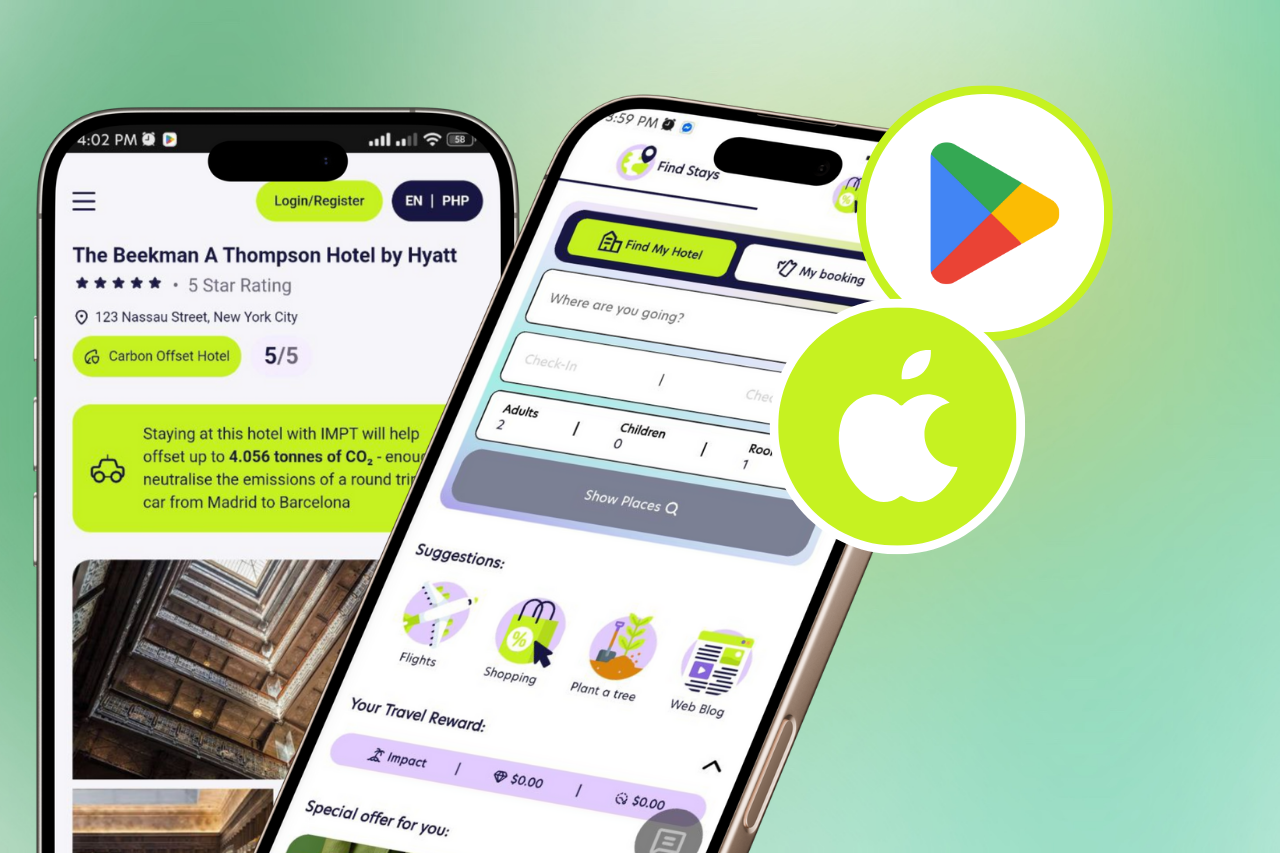
Earn carbon credits on every hotel booking
Book 8M+ hotels in 195 countries · Up to 45% cashback.
Traditional loyalty programs reward volume. Climate-positive platforms reward intention—and let you offset travel’s carbon as you book.
Dear IMPT Family,
Loyalty programs are ubiquitous in travel. You book, you earn points, you redeem them for flights or room nights. But the model has a perverse incentive: more travel equals more rewards. The system is built to encourage frequency, not sustainability.
A new generation of platforms—including IMPT—flips this. Instead of rewarding volume, they reward intention. Book responsibly, stay longer, choose eco-certified hotels, and you earn carbon credits toward verified climate projects. The loyalty program itself becomes an engine for climate action.
🔥 Key Highlights 🔥
1️⃣ Traditional hotel loyalty programs have no climate criteria—they reward frequency, not impact
2️⃣ Carbon-credit loyalty models let you offset travel while booking, automating the climate action
3️⃣ Longer stays, eco-certified hotels, and low-carbon routes earn higher rewards
4️⃣ Credits from these programs fund verified climate projects: reforestation, renewable energy
5️⃣ The approach shifts travel’s carbon narrative from “I flew, so I’m guilty” to “I booked with impact”
1️⃣ The Flaw in Traditional Loyalty
Classic hotel and airline loyalty programs—Marriott Bonvoy, IHG One Rewards, Hilton Honors—operate on volume. Stay 100 nights in a year, unlock elite status. Fly 100,000 miles, earn free upgrades. The incentive structure is simple: more travel = more status = more rewards.
This works from a business perspective (high-frequency travellers generate revenue). But from a climate perspective, it’s backwards. The program is actively encouraging the highest-carbon behaviour: frequent short-haul flights, multiple destinations, rushed stays.
2️⃣ The Carbon-Credit Alternative
Platforms like IMPT operate differently. You book a hotel stay, and the platform:
✔ Calculates the carbon associated with your stay (based on distance, accommodation type, duration)
✔ Sources verified carbon credits matching that impact
✔ Retires those credits on your behalf, offsetting the stay
✔ Gives you control over which climate projects your credits fund
The result: every booking you make is automatically carbon-neutral. The guilt vanishes. The climate benefit is real and verified.
3️⃣ Incentives That Align With Sustainability
Carbon-credit platforms can also structure rewards to encourage low-carbon behaviour:
✔ Booking eco-certified hotels earns more credits
✔ Longer stays (amortising transport carbon) earn higher per-night rewards
✔ Train-accessible destinations earn bonuses
✔ Higher occupancy (room type, number of guests) sometimes earns more credits
This inverts the traditional incentive: instead of rewarding frequency, the program rewards intention and impact.
4️⃣ Where Credits Go
Verified carbon credits fund projects that reduce or remove emissions:
✔ Reforestation and forest protection (often the largest category)
✔ Renewable energy (solar, wind, hydro projects in developing regions)
✔ Energy efficiency (retrofitting buildings, improving insulation)
✔ Methane capture (landfill and agricultural methane reduction)
✔ Carbon removal (direct air capture, soil carbon sequestration)
The best programs let you choose which project types your credits support, giving you agency in the climate outcome.
5️⃣ The Transparency Question
Not all carbon credits are equal. Some projects are robust and independently verified; others are weak or double-counted. A credible carbon-loyalty program:
✔ Uses credits from verified suppliers (Gold Standard, VCS/Verra, American Carbon Registry)
✔ Publishes data on which projects are funded
✔ Allows you to track your impact
✔ Retires credits promptly (not holding them for financial gain)
Look for these markers before trusting a platform’s climate claims.
6️⃣ The Comparison: Traditional vs Carbon-Based
A traditional loyalty program: You book 10 hotel nights over the year. You earn 5,000 points. You redeem them for a free night. The program encouraged you to take more trips (to earn more points). Net climate impact: nil or negative (you travelled more to earn rewards).
A carbon-credit program: You book 10 hotel nights. The platform calculates 5 tonnes of CO₂ (including your flights). It sources 5 verified carbon credits and retires them, offsetting your stay. The program encourages longer stays and lower-carbon bookings (higher rewards). Net climate impact: your travel is carbon-neutral, and verified climate projects are funded.
7️⃣ Integration With Other Climate Actions
Booking through a carbon-loyalty platform doesn’t require lifestyle sacrifice. You still travel, you still earn rewards, you still get the same prices as direct booking. The difference is that your travel is automatically offset, and your loyalty points are climate-positive. Combined with choosing trains, eco-certified hotels, and staying longer, the layered approach reduces your footprint substantially.
Looking Ahead — Loyalty That Aligns With Values
Traditional loyalty programs reward the wrong behaviour. Carbon-credit platforms offer a better model: travel is offset automatically, your rewards fund climate projects, and the incentive structure aligns with sustainability. When choosing where to book, prioritise platforms that tie loyalty to climate impact. It’s not sacrifice; it’s shopping with intention.
Let’s keep building — together. 🌍💚