SUMMER 2026 · 6 destinations

Belgian Slow Travel in Belgium.

Flemish belfries, Walloon forests, Brussels art-nouveau and the Meuse river bends — six Belgian destinations where summer 2026 can be both unhurried and carbon-balanced, stitched together by one of Europe's densest rail networks.

6 destinations 1 ton CO₂ removed per booking 100% UN-verified
Find your Belgium eco-stay →

Same price as direct · 1 ton CO₂ removed per booking

Belgium punches above its weight on the slow-travel scale: a 3,600 km SNCB/NMBS rail network connects every city in this list within 90 minutes of Brussels Midi, the electricity grid runs on a low-carbon mix of nuclear (around 40%) and wind (around 25%, with the North Sea cluster expanding fast), and the Flemish cycling culture rivals the Dutch — the LF Vlaanderen routes and the Kempen node network turn the whole north of the country into a signposted cycle map. Heritage protection is taken seriously: Bruges, Brussels' Grand Place, the Belfries of Belgium and France, and the Plantin-Moretus printing museum in Antwerp are all UNESCO-listed, locking in the low-rise, walkable old-town format.

Every reservation below removes one verified ton of CO₂ through IMPT's offset programme — paid from our commission, never added to your bill. The six destinations cover Brussels, the four great Flemish cities (Bruges, Antwerp, Ghent, Leuven), and a Walloon Ardennes anchor at Dinant — each chosen for sustainability credentials, rail reach and the density of Green Key-certified accommodation in their old centres.

Top 6 eco destinations in Belgium

Brussels eco-travel in Belgium #1
Brussels-Capital

Brussels

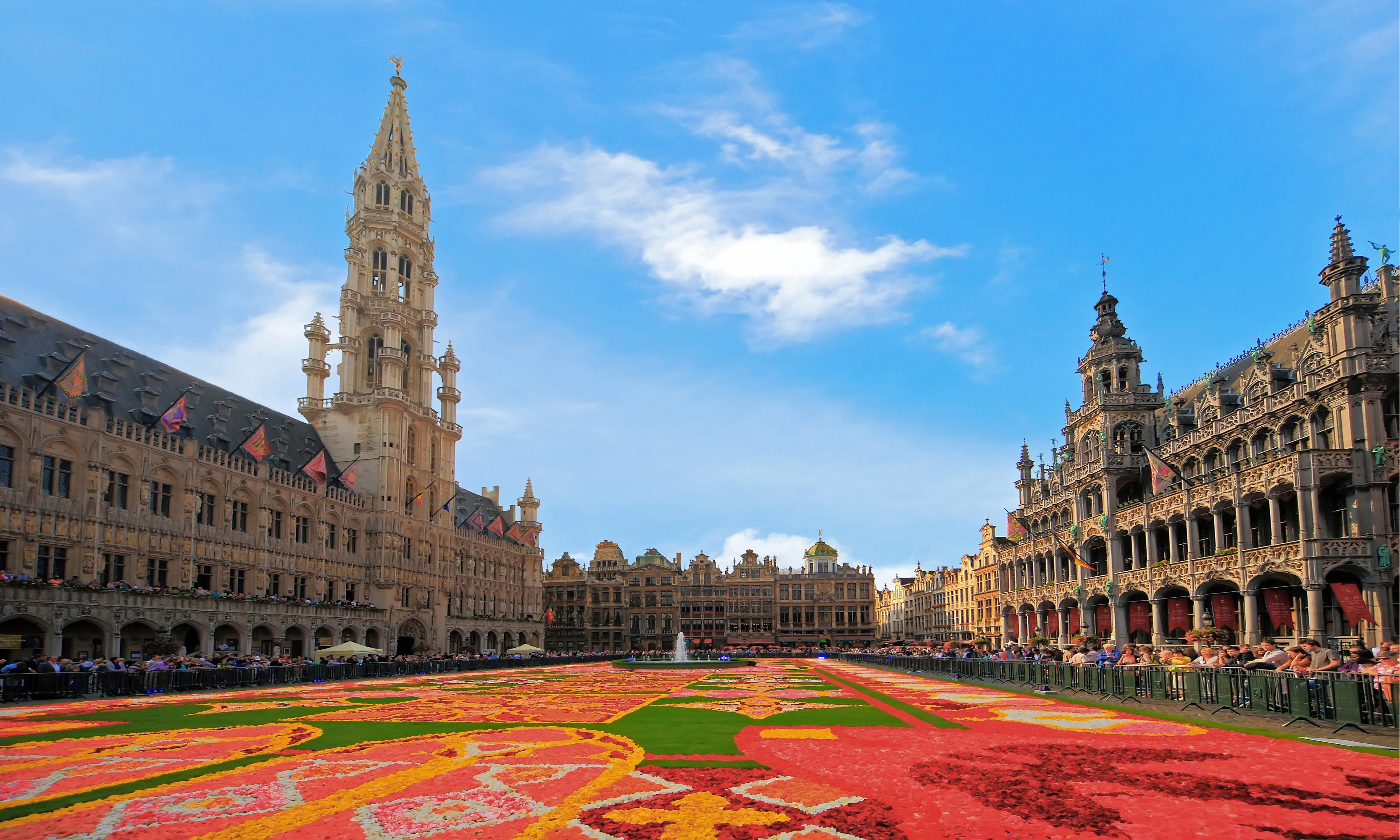
More than the EU bureaucracy postcard — Brussels is a layered art-nouveau capital, an Atomium-and-Magritte modernist showcase and a chocolate-and-brewery food scene rolled into a 20-minute walk. The Pentagon (inner ring) is largely car-free at weekends, the STIB metro and tram network is fully electric, and central hotels around Sablon, Marolles and Saint-Géry concentrate the Green Key and Travelife-certified stock.

Highlights: Grand Place (UNESCO) · Magritte & Fin-de-Siècle museums · Sablon antiques quarter · Atomium & Mini-Europe

Best: May–Sep Browse stays →
Bruges eco-travel in Belgium #2
West Flanders

Bruges

The UNESCO old town has the highest concentration of intact medieval architecture in northern Europe — the Belfry, the Markt, the Béguinage and the Lake of Love are all within a 15-minute walk. Bruges enforces strict heritage rules that have kept the centre low-rise and car-light: most hotels here are converted merchant houses, several certified under the Green Key or Travelife schemes, and the canal boats run electric since 2022. Pair with a 20-minute train hop to Ostend for a North Sea beach day.

Highlights: Belfry & Markt · Béguinage & Lake of Love · Groeningemuseum (Flemish Primitives) · Electric canal boat tour

Best: May–Jun, Sep Browse stays →
Antwerp eco-travel in Belgium #3
Antwerp

Antwerp

The diamond capital with Rubens at the centre and a Zaha Hadid port-house on the skyline — Antwerp pairs serious heritage (the cathedral, the Plantin-Moretus UNESCO press museum) with one of the strongest fashion scenes in Europe (the Royal Academy alumni). The Eilandje and Het Zuid districts are walking-paced, the MAS museum offers the best harbour panorama, and the city's Velo-Antwerpen e-bike share is one of Europe's largest.

Highlights: Cathedral & Rubens House · MAS museum panorama · Plantin-Moretus (UNESCO) · Het Zuid design district

Best: May–Sep Browse stays →
Ghent eco-travel in Belgium #4
East Flanders

Ghent

Ghent has the Bruges medieval skyline without the day-tripper crush — Gravensteen castle, the Saint Bavo cathedral (home to the Van Eyck Mystic Lamb altarpiece, fully restored in 2024), and the Graslei/Korenlei river quays. The 2017 circulation plan removed cars from the entire historic core, the city is the largest Veggie City in Europe (Thursday Veggie Day since 2009), and the Patershol student quarter is wall-to-wall Green Key boutique hotels.

Highlights: Mystic Lamb altarpiece · Gravensteen castle · Graslei & Korenlei quays · Patershol food quarter

Best: May–Sep Browse stays →
Leuven eco-travel in Belgium #5
Flemish Brabant

Leuven

Twenty minutes east of Brussels and home to KU Leuven (founded 1425), the city pairs a flamboyant Gothic town hall with the Groot Begijnhof UNESCO complex of 300 restored beguine houses. Leuven won the European Capital of Innovation in 2020 on the back of its Leuven 2030 climate pact, and the historic Stella Artois brewery (yes, that one) runs guided sustainability tours. Compact, walkable, and almost entirely car-free in the centre.

Highlights: Town hall & Grote Markt · Groot Begijnhof (UNESCO) · KU Leuven university library · Stella Artois brewery tour

Best: May–Sep Browse stays →
Dinant eco-travel in Belgium #6
Namur

Dinant

The Walloon Ardennes anchor — a slender town wedged between the Meuse river and a 100-metre limestone cliff, with the citadel above and the onion-domed Notre-Dame collegiate church below. Birthplace of Adolphe Sax (the saxophone), Dinant is the launch point for kayak descents of the Lesse river, the Han-sur-Lesse caves, and the densely forested Famenne-Ardenne UNESCO Global Geopark — a region the EU classifies as one of Belgium's most ecologically intact.

Highlights: Citadel cable-car · Notre-Dame collegiate church · Lesse river kayak · Han-sur-Lesse caves

Best: May–Sep Browse stays →

Why summer eco-travel in Belgium?

Belgium sits at the structural intersection of one of Europe's densest rail networks (SNCB/NMBS reaches every city in this list within 90 minutes of Brussels), a low-carbon electricity grid (nuclear and offshore wind together cover roughly two-thirds of generation), and a heritage-protection regime that has kept the Flemish belfry towns and the Walloon Meuse valley low-rise and walkable. The country is small enough to combine four cities and an Ardennes weekend into a single 7-night trip — entirely by train, with no rental car required — and the Green Key and Clé Verte certification standards have deep penetration across the boutique-hotel sector in the historic centres. IMPT layers a UN-verified 1-ton CO₂ removal on every booking — at no extra cost, paid from our commission.

Frequently asked questions

When is the best time to visit Belgium for a sustainable summer?

May, June and September are the sweet spot — long daylight, the Ardennes forests at peak green, and Bruges and Ghent before the July–August day-tripper peak. July is the festival month (Tomorrowland, Ghent Festival, Brussels Pride) and worth planning around if music is the draw; otherwise the shoulder weeks deliver the best hotel rates and the quietest old towns.

How do I travel between Belgian cities without a car?

The SNCB/NMBS rail network connects every destination in this list within 90 minutes of Brussels Midi/Zuid. A weekend Standard Multi pass and the Rail Pass 10-journey card both cut the per-leg cost sharply. STIB (Brussels), De Lijn (Flanders) and TEC (Wallonia) cover the urban tram, metro and bus legs on a single contactless tap. For Dinant change at Namur.

Are eco-hotels in Belgium more expensive than regular hotels?

No. Booking through IMPT costs the same as booking direct — the carbon removal is paid from IMPT's commission, not added to your bill. Belgian hotel rates spike around the Brussels EU summits, the Antwerp diamond and fashion weeks, and the Tomorrowland weekend in late July — that's pure supply-and-demand, not an eco-premium.

Which Belgian destination is best for first-time visitors?

Brussels plus Bruges plus one more Flemish city (Ghent or Antwerp) is the classic 5-night combination — all under an hour apart by train. Add a 2-night Ardennes finish in Dinant or Namur if you want to swap the canals for cliffs, kayaks and forest walks. Avoid trying to do all six in a single week — slow travel is the point.

How does IMPT make a Belgian hotel booking carbon-neutral?

Every reservation triggers a verified one-tonne CO₂ removal — UN-certified, paid from our commission. The offset is sourced from a portfolio of reforestation and renewable-energy projects in Europe and East Africa, and is enough to fully balance a typical short-haul flight to Brussels plus a 4-night stay. See how we carbon-balance every stay.

Can I cycle between Belgian cities?

Yes — the Flemish node network (knooppuntennetwerk) covers 13,000 km of signposted route across the north, and the RAVeL greenway network covers another 1,600 km in Wallonia on former railway beds and canal towpaths. The Bruges–Ghent–Antwerp triangle is the most popular multi-day loop and is comfortably done on a hybrid in three to four days.

Plan a Belgium summer that gives back

Same price as direct booking. No hidden fees. Every reservation removes one UN-verified ton of CO₂ — paid from our commission, never added to your bill.

Search 6 Belgium destinations →