SUMMER 2026 · 7 destinations

Dutch Summer in the Netherlands.

Canal cities, polder farmland, North Sea dunes and the UNESCO Wadden Sea — seven Dutch destinations where summer 2026 can be both quietly memorable and carbon-balanced, knitted together by a 100% renewably powered train network and 35,000 km of cycle path.

7 destinations 1 ton CO₂ removed per booking 100% UN-verified
Find your Netherlands eco-stay →

Same price as direct · 1 ton CO₂ removed per booking

The Netherlands has crossed the structural tipping point most of Europe is still chasing: wind and solar combined now supply more than half of national electricity, and the NS train network has run on 100% renewable electricity since 2017 — every intercity, every sprinter, every Schiphol airport shuttle. For travellers that means the kilowatt-hours behind your hotel room, your charge points and your rail leg are green by default. Layer on a 35,000 km national cycle network (the densest on earth), strict polder conservation rules administered by the regional water boards, and the UNESCO Wadden Sea as Europe's largest tidal-flat reserve, and the country is one of the easiest places in Europe to plan a summer that genuinely lowers your footprint.

Every reservation below removes one verified ton of CO₂ through IMPT's offset programme — paid from our commission, never added to your bill. The seven destinations span the Randstad's canal cities (Amsterdam, Rotterdam, The Hague, Utrecht, Haarlem), the limestone south (Maastricht), and the car-free water village of Giethoorn in Overijssel — each chosen for sustainability infrastructure, cycling access and train reach as much as for the canal-side terraces.

Top 7 eco destinations in Netherlands

Amsterdam eco-travel in Netherlands #1
North Holland

Amsterdam

The UNESCO canal ring is best read from a bicycle or an electric canal boat — both are how locals actually move. Amsterdam's centre is closed to most non-resident cars, the GVB tram network runs on Dutch wind power, and the Jordaan, De Pijp and Oost neighbourhoods are studded with Green Key-certified canal hotels in restored 17th-century merchants' houses. Skip July's stag-do crowds and book late May or early September.

Highlights: UNESCO canal belt · Rijksmuseum & Van Gogh Museum · Vondelpark cycling · NDSM shipyard art quarter

Best: May–Jun, Sep Browse stays →
Rotterdam eco-travel in Netherlands #2
South Holland

Rotterdam

Rebuilt from the ground up after 1940, Rotterdam is the architectural counterweight to Amsterdam's golden-age façades — Cube Houses, the Markthal, the De Rotterdam tower and a working harbour climate plan that targets net-zero by 2050. The Floating Office on the Rijnhaven is the world's largest floating office and runs entirely on rooftop solar. Hotels in Witte de Withstraat and Katendrecht cluster around the Green Key standard.

Highlights: Cube Houses & Markthal · Maritime Museum harbour walk · Kunsthal & Boijmans Depot · Kinderdijk windmills day trip

Best: May–Sep Browse stays →
The Hague eco-travel in Netherlands #3
South Holland

The Hague

Seat of the Dutch government and the International Court of Justice, The Hague pairs diplomatic gravitas with an 11-km North Sea beach at Scheveningen and Kijkduin. The Binnenhof complex is back open after restoration, the Mauritshuis holds Vermeer's Girl with a Pearl Earring, and the city's tram and HTM bus fleet are fully electrified. Stay in Zeeheldenkwartier for boutique B&Bs within walking distance of the dunes.

Highlights: Mauritshuis (Vermeer) · Binnenhof parliament · Scheveningen beach & pier · Madurodam miniature park

Best: May–Sep Browse stays →
Utrecht eco-travel in Netherlands #4
Utrecht

Utrecht

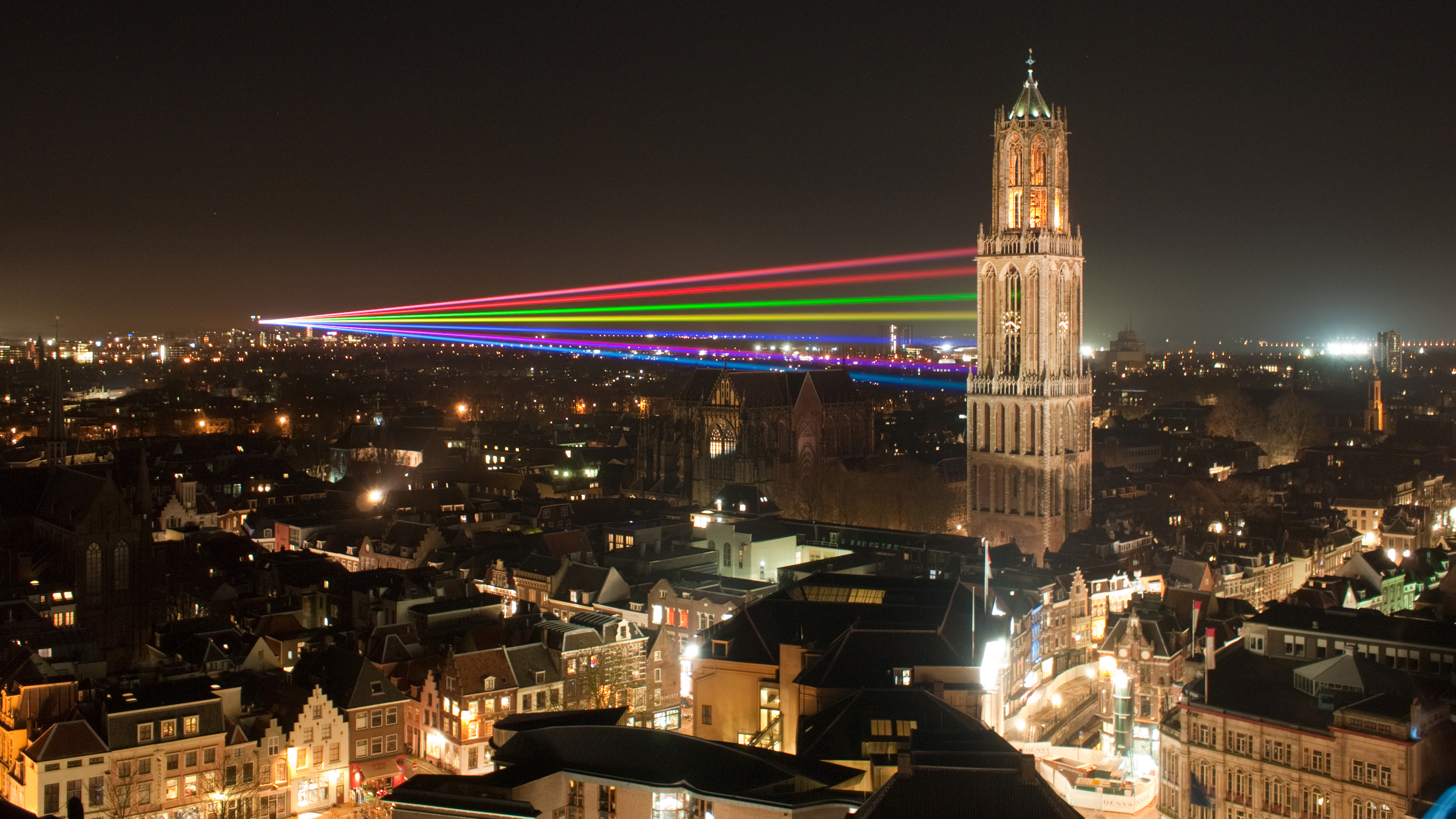
The compact, student-driven counterpoint to Amsterdam — Utrecht's split-level wharf canals (the Oudegracht is unique in Europe) are lined with cafés at water level, and the city sits on the world's largest covered bicycle parking (Stationsstalling, 12,500 spaces). The Dom Tower is back open after a decade-long restoration, and the Hoog Catharijne district has become a model for solar-roofed station retrofits.

Highlights: Oudegracht wharf canals · Dom Tower climb · Centraal Museum & Rietveld House · Stationsstalling cycle parking

Best: May–Sep Browse stays →
Maastricht eco-travel in Netherlands #5
Limburg

Maastricht

Tucked against the Belgian and German borders, Maastricht is the Netherlands' most Roman, most southern and most Burgundian city — limestone caves under the Sint-Pietersberg, the Vrijthof and Onze Lieve Vrouweplein squares, and a Boekhandel Dominicanen built inside a 13th-century church. The surrounding South Limburg hills are the country's only proper cycling climbs and the launchpad for the Amstel Gold loop.

Highlights: Vrijthof & Sint-Servaasbasiliek · Sint-Pietersberg caves · Boekhandel Dominicanen · South Limburg hill cycling

Best: May–Sep Browse stays →
Haarlem eco-travel in Netherlands #6
North Holland

Haarlem

Fifteen minutes by train from Amsterdam Centraal and a quieter base for the Randstad — Haarlem's Grote Markt and Sint-Bavokerk anchor a pedestrianised old town that still feels lived-in rather than touristed. The Frans Hals Museum has been refreshed, the Spaarne river loops the centre, and the North Sea dunes at Zandvoort (with its 100% renewable F1 circuit) are a 10-minute train ride west.

Highlights: Grote Markt & Sint-Bavokerk · Frans Hals Museum · Spaarne canal walks · Zandvoort dunes & beach

Best: May–Sep Browse stays →
Giethoorn eco-travel in Netherlands #7
Overijssel

Giethoorn

The 'Venice of the North' is car-free by design — peat-cutters dug the canals 700 years ago and the village still moves entirely by whisper-boat (fluisterboot, electric) and footbridge. Stay in one of the thatched-roof Travelife-certified guesthouses, hire an electric punter for the day, and pair the visit with the Weerribben-Wieden national park, the largest peat marsh in north-west Europe.

Highlights: Electric whisper-boat tour · Thatched-roof village walk · Weerribben-Wieden NP · Otter spotting at dusk

Best: May–Sep Browse stays →

Why summer eco-travel in Netherlands?

The Netherlands sits at the structural intersection of an already-renewable grid (50%+ wind and solar, NS rail at 100% renewable since 2017), the densest cycling network on earth (35,000 km of dedicated path), and a polder-and-water-board governance tradition that has kept conservation enforceable for centuries. The UNESCO Wadden Sea on the north coast is Europe's largest tidal-flat reserve, and the country's hotel sector has one of the highest Green Key penetration rates in the world — roughly one in three certified-eligible hotels carries the label. Distances are short enough that a single 7-night trip can combine three or four destinations entirely by train and bicycle, with no rental car required. IMPT layers a UN-verified 1-ton CO₂ removal on every booking — at no extra cost, paid from our commission.

Frequently asked questions

When is the best time to visit the Netherlands for a sustainable summer?

Late May through June and early September are the sweet spot — long daylight (sunset past 22:00 in June), tulip and rose gardens at peak, school holidays not yet started, and hotel prices well below July–August. The Dutch August peak is short (mid-July to mid-August) and concentrates demand in Amsterdam, Scheveningen and the Wadden islands.

How do I travel between Dutch cities without a car?

The NS intercity network reaches every destination in this list within two hours of Amsterdam, runs at 100% renewable electricity, and offers an OV-chipkaart or contactless-card single-tap fare across trains, trams, metro and buses. For Giethoorn change at Steenwijk to a local bus; for the Wadden islands take the train to Den Helder or Harlingen and the ferry across.

Are eco-hotels in the Netherlands more expensive than regular hotels?

No. Booking through IMPT costs the same as booking direct — the carbon removal is paid from IMPT's commission, not added to your bill. Dutch hotel rates spike around King's Day (27 April), Amsterdam Pride (late July/early August) and the major football and tech conferences in Rotterdam and Amsterdam — that's pure supply-and-demand, not an eco-premium.

Which Dutch destination is best for first-time visitors?

Amsterdam plus one quieter base is the classic combination. Pair three nights in the canal belt with two or three nights in Haarlem, Utrecht or The Hague — each is under 30 minutes by train and gives a calmer evening pace. If you want a true off-grid finish, add Giethoorn or a Wadden island like Texel for the final two nights.

How does IMPT make a Dutch hotel booking carbon-neutral?

Every reservation triggers a verified one-tonne CO₂ removal — UN-certified, paid from our commission. The offset is sourced from a portfolio of reforestation and renewable-energy projects in Europe and East Africa, and is enough to fully balance a typical short-haul flight to Schiphol plus a 4-night stay. See how we carbon-balance every stay.

Can I cycle between cities in the Netherlands?

Yes — the LF (Landelijke Fietsroute) long-distance network covers 4,500 km of signposted route, and the OV-fiets rental scheme lets you pick up a bike at almost any train station for around €4.50/day. The LF1 North Sea route from Den Helder via Haarlem to The Hague, and the LF2 Amsterdam–Brussels via Utrecht and Maastricht, are the two most popular multi-day options.

Plan a Netherlands summer that gives back

Same price as direct booking. No hidden fees. Every reservation removes one UN-verified ton of CO₂ — paid from our commission, never added to your bill.

Search 7 Netherlands destinations →