SUMMER 2026 · 8 destinations

Canadian Summer in Canada.

From the Rockies to the Atlantic — eight Canadian destinations where summer 2026 lines up with the FIFA World Cup, the world's second-cleanest national grid, and a continent of National Parks on the doorstep.

8 destinations 1 ton CO₂ removed per booking 100% UN-verified
Find your Canada eco-stay →

Same price as direct · 1 ton CO₂ removed per booking

Canada's electricity grid is roughly 67% renewable — hydropower-dominant, anchored by Quebec, BC, Manitoba and Newfoundland-Labrador — which means the kilowatt-hours behind your hotel's air-con, EV charger and elevator are among the cleanest on the planet by default. Add VIA Rail's Corridor (Quebec City to Windsor) that runs car-free along the country's most populated 1,200 km, Parks Canada's 37 National Parks (Banff, Jasper, Gros Morne, Cape Breton), and a Green Key hotel certification that started in Canada and now spans the world, and the country is structurally set up for the low-carbon summer traveller.

Every reservation below removes one verified ton of CO₂ through IMPT's offset programme — paid from our commission, never added to your bill. The eight destinations span the Great Lakes (Toronto), the Pacific (Vancouver, Whistler, Victoria), Quebec's hydropower heartland (Montreal, Quebec City), the Rockies (Banff) and the Atlantic (Halifax). Toronto and Vancouver are FIFA WC 2026 host cities, which tightens room inventory on match weekends and loosens it sharply around them.

Top 8 eco destinations in Canada

Toronto eco-travel in Canada #1
Ontario

Toronto

Canada's biggest city is a FIFA WC 2026 host — six matches at BMO Field across June and July. Toronto's grid is roughly 90% non-emitting (nuclear plus hydro plus growing wind), the TTC subway and streetcar network covers downtown end-to-end, and the Toronto Islands ferry runs every 30 minutes for a five-minute crossing to car-free beaches. Stay around King West, the Distillery District or Yorkville for car-free access to the waterfront, Kensington and the Royal Ontario Museum.

Highlights: CN Tower & waterfront · FIFA WC 2026 at BMO Field · Toronto Islands ferry & beaches · Kensington Market & Distillery District

Best: May–Sep Browse stays →
Vancouver eco-travel in Canada #2
British Columbia

Vancouver

Vancouver is Canada's other FIFA WC 2026 host — seven matches at BC Place across June and July. BC's grid is 98% renewable (hydro), the SeaBus and SkyTrain link North Vancouver and Richmond to downtown without a car, and the 28 km Seaside cycle route loops Stanley Park, False Creek and Kitsilano. Summer here is the local secret — 22°C, low humidity, and 16-hour daylight at the solstice. Stay downtown, Gastown or Kitsilano for car-free everything.

Highlights: Stanley Park seawall · FIFA WC 2026 at BC Place · Granville Island & False Creek · Capilano Suspension Bridge

Best: Jun–Sep Browse stays →
Montreal eco-travel in Canada #3
Quebec

Montreal

Quebec's grid is 99% hydropower — Hydro-Québec exports surplus electricity to New York and New England, and Montreal runs on the cleanest grid of any major city in North America. The Metro is 4°C cooler than the street in July, the Plateau and Mile End are walkable for a long weekend, and the new REM light rail finally links downtown to Trudeau airport. Summer brings the Jazz Festival, Just for Laughs and the Tour de l'Île cycling event.

Highlights: Old Montreal & Notre-Dame Basilica · Mont Royal Park · Jazz Festival & Plateau · Jean-Talon Market

Best: May–Sep Browse stays →
Quebec City eco-travel in Canada #4
Quebec

Quebec City

North America's only walled city north of Mexico — UNESCO-listed Vieux-Québec sits above the St. Lawrence with cobblestone streets, the Château Frontenac silhouette and a Plains of Abraham park that's the city's lungs in summer. Quebec's hydropower grid puts the city's electricity footprint near zero, and the funicular plus the Lévis ferry get you everywhere without a car. Combine with Montreal on the three-hour VIA Rail Corridor — the country's busiest train route.

Highlights: Vieux-Québec UNESCO old town · Château Frontenac & Dufferin Terrace · Plains of Abraham · Île d'Orléans cider road

Best: May–Sep Browse stays →
Banff eco-travel in Canada #5
Alberta

Banff

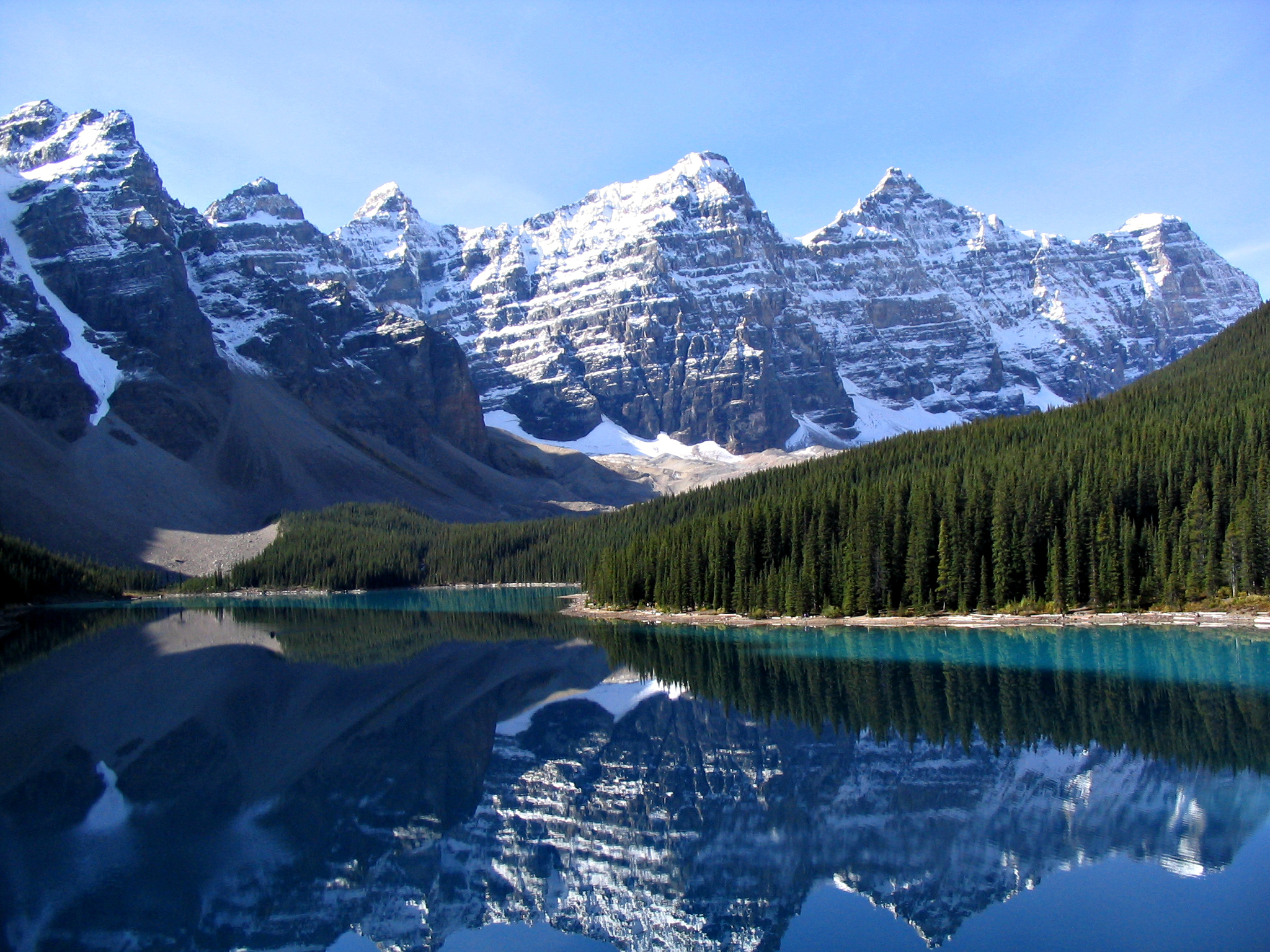
Canada's oldest National Park (1885) and the country's most photographed mountain landscape — Moraine Lake, Lake Louise, the Bow Valley and the Icefields Parkway, one of the great drives on Earth. Parks Canada caps daily visitor numbers at Moraine and Lake Louise and runs an excellent shuttle from Banff townsite, which is the carbon-cheapest way to see the lakes. Stay in Banff or Canmore for the shuttle, the Whyte Museum and the Banff Centre summer arts programme.

Highlights: Moraine Lake & Lake Louise · Icefields Parkway drive · Banff townsite & Whyte Museum · Sulphur Mountain gondola

Best: Jun–Sep Browse stays →
Whistler eco-travel in Canada #6
British Columbia

Whistler

The 2010 Olympic mountain reinvents itself every summer — the Peak 2 Peak gondola, lift-served mountain biking on Blackcomb (one of the largest networks in the world), Lost Lake's swimming beach, and the Sea-to-Sky drive from Vancouver (one of Canada's signature road trips). Whistler Blackcomb's parent company hit its own renewable-energy targets in 2023, and the resort's free village shuttle is electric. The Audain Art Museum is a quiet eco-architecture highlight.

Highlights: Peak 2 Peak gondola · Lost Lake & Lakeside cycle ride · Sea-to-Sky Highway drive · Audain Art Museum

Best: Year-round Browse stays →
Halifax eco-travel in Canada #7
Nova Scotia

Halifax

Atlantic Canada's biggest city is also the gateway to Cape Breton — Peggy's Cove, the Cabot Trail, and Lunenburg's UNESCO old town are all day-trips. Halifax's harbour is the second-deepest natural harbour in the world, the Citadel and Public Gardens are walkable from any downtown hotel, and Nova Scotia Power is decarbonising fast (target: closing all coal by 2030). The Halifax-Dartmouth ferry is the oldest continuously running saltwater ferry in North America.

Highlights: Halifax waterfront & Pier 21 · Peggy's Cove day trip · Cabot Trail (Cape Breton) · Halifax Citadel & Public Gardens

Best: Jun–Sep Browse stays →
Victoria eco-travel in Canada #8
British Columbia

Victoria

BC's capital sits at the southern tip of Vancouver Island, two and a half hours by BC Ferries (or 35 minutes by floatplane) from Vancouver. The Inner Harbour, the Empress Hotel and Butchart Gardens are the headline trio, but Victoria's quiet superpower is its walkability — the entire downtown is flat, the cycle network is the densest in Canada, and Pacific Northwest summer (low-20s°C, 16 hours of daylight) makes it the country's most comfortable July destination.

Highlights: Inner Harbour & Empress Hotel · Butchart Gardens · Royal BC Museum · Galloping Goose cycle trail

Best: May–Sep Browse stays →

Why summer eco-travel in Canada?

Canada combines three things almost no other major travel destination can: a 67% renewable grid (hydropower-dominant, with Quebec, BC and Manitoba effectively zero-carbon), 37 National Parks that range from the Rockies to the Atlantic Maritimes, and the longest VIA Rail Corridor in the western hemisphere connecting six of the eight destinations above without a rental car. Summer 2026 is also FIFA World Cup summer — Toronto and Vancouver host 13 matches between them, which tightens room inventory on those weekends and loosens it sharply on the surrounding weekdays. Hydro-Québec exports its surplus clean electricity to New York and New England, making the entire Northeast cleaner by default. IMPT layers a UN-verified 1-ton CO₂ removal on every booking — at no extra cost, paid from our commission.

Frequently asked questions

When is the best time to visit Canada for a sustainable summer?

Late June through early September is the core Canadian summer — long daylight (16+ hours at the solstice in Vancouver), warm-but-not-hot temperatures (low 20s°C in most cities), and full Parks Canada service across all 37 National Parks. May and September are the value shoulders for the cities, but the Rockies and Atlantic Canada are weather-dependent before June and after Labour Day.

How does FIFA World Cup 2026 affect hotel availability in Canada?

Toronto (BMO Field) and Vancouver (BC Place) together host 13 matches between June 12 and July 7, 2026. Rates in both cities spike 2–3x on match nights and the surrounding weekend. The cleanest workaround is to book 3–5 days either side of the host-city matches, or to base in Montreal, Quebec City or Victoria, which are unaffected by the WC schedule.

How do I travel between Canadian cities without a car?

VIA Rail's Corridor (Quebec City — Montreal — Ottawa — Toronto — Windsor) is the busiest route and runs near-airline frequency with seat-side power and dining cars. The Canadian (Toronto–Vancouver) is one of the great long-distance train journeys in the world (four nights). For BC, BC Ferries links Vancouver, Victoria and the Gulf Islands; for Atlantic Canada, fly into Halifax and rent for the Cabot Trail.

Are eco-hotels in Canada more expensive than regular hotels?

No. Booking through IMPT costs the same as booking direct — the carbon removal is paid from IMPT's commission, not added to your bill. Canadian hotel rates spike around Canada Day (July 1), the Calgary Stampede, the Toronto International Film Festival in September, and the FIFA WC 2026 match weekends — that's pure supply-and-demand, not an eco-premium.

Which Canadian destination is best for a first-time visitor?

Vancouver + Banff is the classic Western Canada combination — fly into YVR, three days in the city, then drive or fly to Calgary and base in Banff or Canmore for the Rockies. For Eastern Canada, Toronto + Montreal + Quebec City on VIA Rail's Corridor (one ticket, three cities, eight hours total) is the easiest first-timer week.

How does IMPT make a Canadian hotel booking carbon-neutral?

Every reservation triggers a verified one-ton CO₂ removal — UN-certified, paid from our commission. The offset is sourced from a portfolio of reforestation and renewable-energy projects, and is enough to fully balance a typical transatlantic flight to Canada plus a 4-night stay. See how we carbon-balance every stay.

Plan a Canada summer that gives back

Same price as direct booking. No hidden fees. Every reservation removes one UN-verified ton of CO₂ — paid from our commission, never added to your bill.

Search 8 Canada destinations →