SUMMER 2026 · 7 destinations

Norwegian Summer in Norway.

The deepest fjords in Europe, the longest coastline in Scandinavia and the only mainland in the world where the sun does not set in midsummer — seven Norwegian destinations where summer 2026 can be both unforgettable and carbon-balanced.

7 destinations 1 ton CO₂ removed per booking 100% UN-verified
Find your Norway eco-stay →

Same price as direct · 1 ton CO₂ removed per booking

Norway runs on roughly 98% renewable electricity — hydropower has dominated the grid for a century, and wind now fills the seasonal gaps. It is also the global leader in EV adoption, with roughly 80% of new cars sold being battery electric and a charging network that extends north of the Arctic Circle. For travellers that means the electricity behind your hotel room, your rental car and the Hurtigruten coastal ferry is greener by default than almost anywhere else on earth. Add the strict UNESCO protections covering the Western Fjords and Bryggen, and Norway is one of the most structurally sustainable summer destinations in Europe.

Every reservation below removes one verified tonne of CO₂ through IMPT's offset programme — paid from our commission, never added to your bill. The seven destinations span the capital and the fjord cities (Oslo, Bergen, Stavanger, Trondheim), the Arctic north (Tromsø, Lofoten) and the UNESCO heart of the Western Fjords (Geiranger) — each picked for transport links and renewable infrastructure as much as for the scenery.

Top 7 eco destinations in Norway

Oslo eco-travel in Norway #1
Centre

Oslo

Norway's capital is one of the cleanest in Europe — almost the entire municipal bus and ferry fleet is electric, the city centre is being rebuilt around pedestrians, and the new waterfront at Tjuvholmen and Bjørvika ties together the Opera House, the Munch museum and the Astrup Fearnley in a 20-minute walk. Most central hotels run Nordic Swan or Green Key certification, and the Holmenkollen ridge is a 25-minute T-bane ride for instant forest.

Highlights: Vigeland Sculpture Park · Opera House & Munch museum · Holmenkollen ski jump · Tjuvholmen waterfront

Best: May–Sep Browse stays →
Bergen eco-travel in Norway #2
West

Bergen

The gateway to the Western Fjords and a UNESCO-listed Hanseatic port in its own right — the wooden warehouses of Bryggen are 700 years old and still standing. Bergen runs the world's first all-electric harbour fleet for tourist sightseeing, the funicular up Fløyen is hydroelectric, and the Bergen Line train to Oslo is one of Europe's most spectacular rail journeys. Base here for Hardangerfjord and Sognefjord day-trips.

Highlights: Bryggen Hanseatic wharf (UNESCO) · Fløibanen funicular · Fish market & seafood scene · Hardangerfjord day-trip

Best: May–Sep Browse stays →
Tromsø eco-travel in Norway #3
North

Tromsø

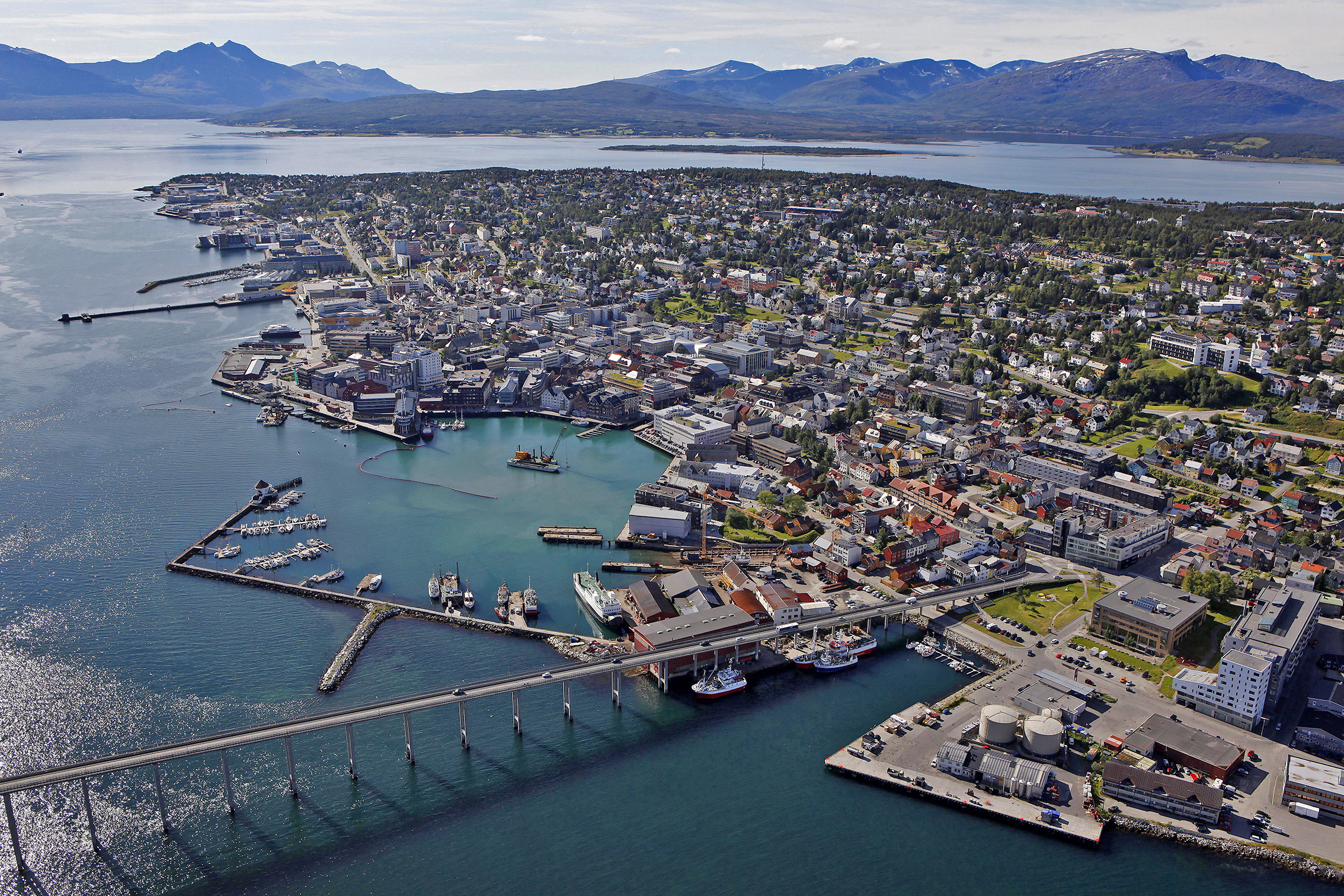
350 km above the Arctic Circle and the largest city in northern Norway — and the easiest place in the world to see the midnight sun from a city centre. From late May to late July the sun does not set, the cable car up Storsteinen runs into the small hours, and the Arctic Cathedral lights up at midnight rather than dusk. Tromsø has been a research hub since the 1800s and its hotels lean Nordic Swan certified.

Highlights: Midnight sun (late May–late Jul) · Fjellheisen cable car · Arctic Cathedral · Polaria & Polar Museum

Best: Jun–Aug Browse stays →
Stavanger eco-travel in Norway #4
West

Stavanger

Norway's oil capital that has quietly turned itself into a clean-energy hub — the city is the headquarters of the country's offshore wind sector and home to the largest contiguous wooden old town in northern Europe (Gamle Stavanger, 173 white timber houses). Use it as the launchpad for the day hike up Preikestolen (Pulpit Rock) and the ferry through Lysefjord. The harbour electric ferries connect to nearby Sola beach.

Highlights: Preikestolen (Pulpit Rock) · Lysefjord ferry · Gamle Stavanger old town · Norwegian Petroleum Museum

Best: May–Sep Browse stays →
Trondheim eco-travel in Norway #5
Centre

Trondheim

Norway's medieval capital and the seat of the Nidaros Cathedral — the northernmost Gothic cathedral in the world and the end-point of the St Olav pilgrim route. Trondheim has the country's highest student share and a bike-share network that punches well above its weight (the Trampe bicycle lift up Brubakken is the only one in the world). The Bakklandet old quarter is a row of pastel timber houses on the Nidelva river.

Highlights: Nidaros Cathedral · Bakklandet & Old Town Bridge · Trampe bicycle lift · Munkholmen island

Best: May–Sep Browse stays →
Lofoten eco-travel in Norway #6
North

Lofoten

A chain of granite islands above the Arctic Circle where 1,000-metre peaks fall straight into the sea — and from late May to mid-July the sun never drops below the horizon. Lofoten is the heartland of the Norwegian rorbu (red-painted fisherman's cabin), most now retrofitted as low-impact stays with hydroelectric heating. The E10 coastal road links Svolvær, Henningsvær and Reine in a single day of driving (or two of cycling).

Highlights: Reine & Hamnøy classic views · Henningsvær harbour & football pitch · Reinebringen hike · Kvalvika beach

Best: Jun–Aug Browse stays →
Geiranger eco-travel in Norway #7
Fjords

Geiranger

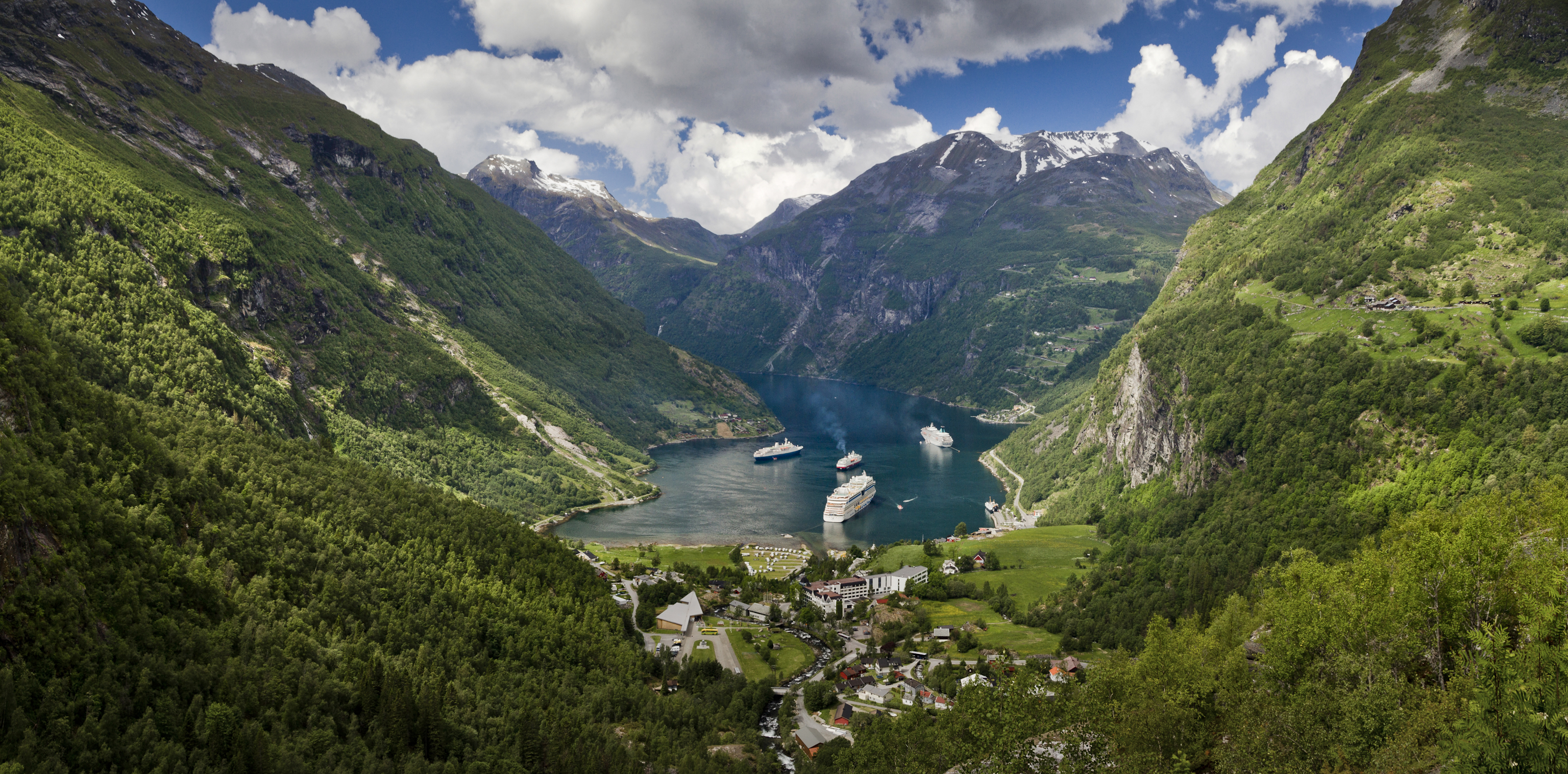
The most photographed of the UNESCO-listed Western Fjords — a 15-km arm of meltwater enclosed by 1,700-metre walls, with the Seven Sisters waterfall plunging down the north side. From 2026 the fjord is one of the world's first zero-emission cruise zones, meaning only electric or hybrid vessels can enter. The Eagle's Road switchbacks and the Dalsnibba viewpoint above are summer-only.

Highlights: Geirangerfjord (UNESCO) · Seven Sisters waterfall · Dalsnibba skywalk · Eagle's Road viewpoint

Best: Jun–Aug Browse stays →

Why summer eco-travel in Norway?

Norway sits at the structural intersection of near-total renewable electricity (98% hydropower-dominated), the highest EV share on earth (~80% of new car sales), and three UNESCO areas covering the Western Fjords, Bryggen and Vega archipelago that have kept the coastline build-free at a scale no Mediterranean competitor can match. The new zero-emission rules now in force on Geirangerfjord and Nærøyfjord — and rolling out across the rest of the World Heritage fjords by 2026 — make summer cruising structurally cleaner than anywhere else in Europe. The Hurtigruten coastal route, the Bergen and Dovre rail lines and a national EV charging network that extends past 70°N close the loop. IMPT layers a UN-verified 1-ton CO₂ removal on every booking — at no extra cost, paid from our commission.

Frequently asked questions

When is the best time to visit Norway for a sustainable summer?

June to August for the full midnight-sun and open-fjord season; late May and early September for the same long days at a fraction of the prices and crowds. The fjord cruise sector is busiest mid-July; if you have flexibility, the shoulder weeks are calmer on the water and easier on hotel rates.

Is the midnight sun real, and where do I see it?

Yes — above the Arctic Circle (66°33′N) the sun does not set for at least one full day each summer. In Tromsø it stays up from roughly 20 May to 22 July; in Lofoten from 28 May to 14 July; on the North Cape from 14 May to 30 July. Below the Arctic Circle (Bergen, Oslo, Stavanger) the sun still dips, but nights stay light enough to read outdoors.

How do I travel around Norway without flying?

The Bergen Line (Oslo–Bergen), the Dovre Line (Oslo–Trondheim) and the Nordland Line (Trondheim–Bodø) cover the spine of the country, and from Bodø the Hurtigruten coastal ferry runs the entire route to Kirkenes near the Russian border. Per passenger, a Hurtigruten leg emits 60–80% less CO₂ than the equivalent domestic flight, with much better views.

Are eco-hotels in Norway more expensive than regular hotels?

No — booking through IMPT costs the same as booking direct, with the carbon removal paid from our commission. Norwegian hotel rates are genuinely high (this is one of the most expensive countries in Europe), but that's structural; Nordic Swan or Green Key certification is now the industry baseline rather than a premium tier.

Which Norwegian destination is best for first-time visitors?

Oslo plus the Norway in a Nutshell route (Oslo → Myrdal → Flåm → Gudvangen → Voss → Bergen) is the classic three-day pairing — one capital, one mountain railway, one fjord boat, one Hanseatic port. Add Lofoten or Tromsø for a fourth leg if you want the Arctic experience.

How does IMPT make a Norwegian hotel booking carbon-neutral?

Every reservation triggers a verified one-tonne CO₂ removal — UN-certified, paid from our commission. The offset comes from a portfolio of reforestation and renewable-energy projects, and is enough to fully balance a typical short-haul flight to Oslo plus a 4-night stay. See how we carbon-balance every stay.

Plan a Norway summer that gives back

Same price as direct booking. No hidden fees. Every reservation removes one UN-verified ton of CO₂ — paid from our commission, never added to your bill.

Search 7 Norway destinations →