From Cart to Canopy: A Single Purchase, Tracked
Climate-Positive Shopping
🌱
Earn carbon credits on every euro you spend
Same prices as direct · 25,000+ partnered stores.
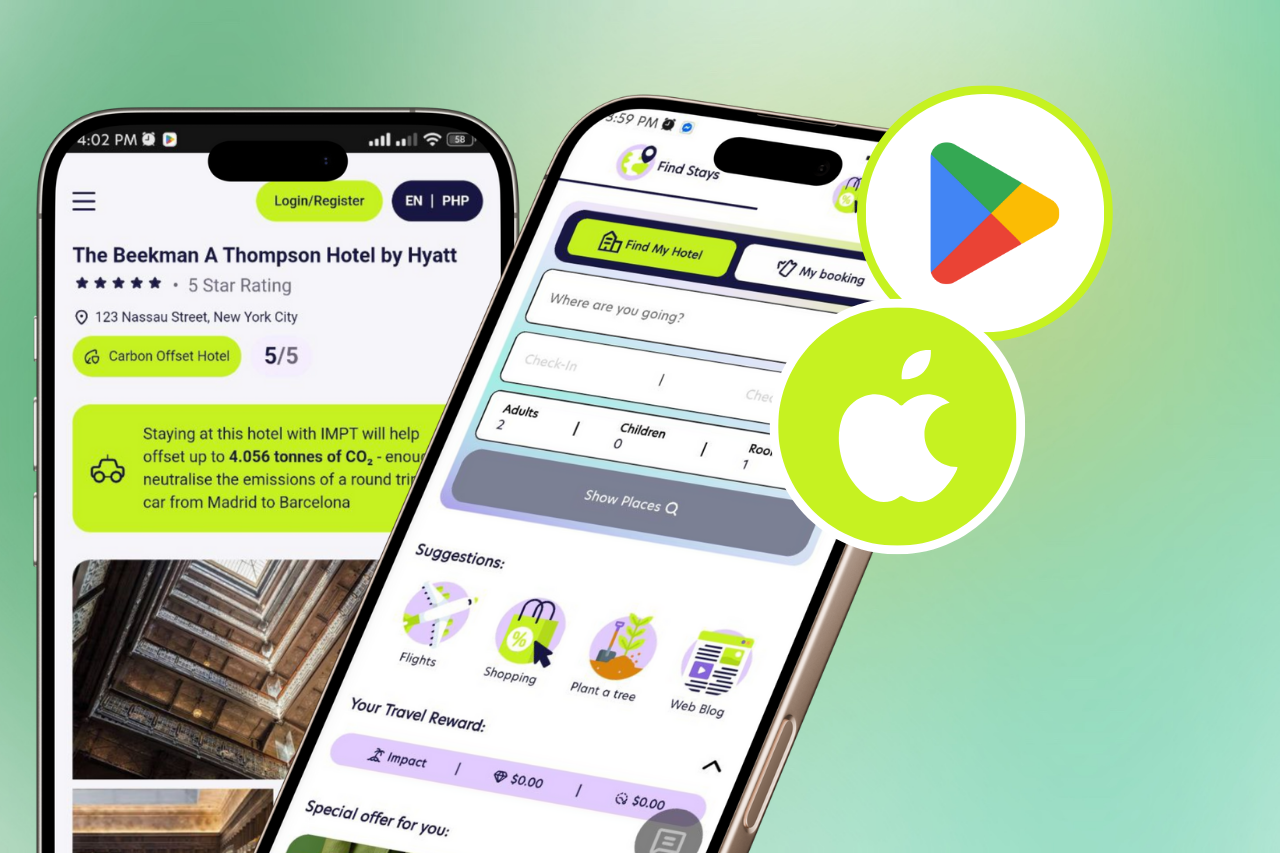
One purchase. One decision. One carbon project, verified and tracked. This is how shopping becomes measurable climate action.
Dear IMPT Family,
Here’s a thought experiment. You buy a pair of shoes online. €80. They arrive in a brown box, you wear them for two years, and then… the story usually ends. You never learn what your purchase meant for the planet. Did the factory run on coal or solar? Where was the leather tanned? How many tonnes of water went into production? The supply chain is invisible.
What if it weren’t? What if, from the moment you clicked “buy” to the moment you wore those shoes to the moment they were donated or recycled, the entire footprint was tracked and tied to a specific climate project? You could see the exact carbon impact, watch it get offset through a verifiable project, and know the trees planted because of your choice.
That’s not a dream anymore. It’s happening now. The technology is here. The standards are live. And early adopters are seeing the full picture for the first time.
🔥 Key Highlights 🔥
1️⃣ What end-to-end purchase tracking actually means
2️⃣ How the supply chain gets mapped and audited
3️⃣ The role of blockchain in transparency
4️⃣ Real examples: following a purchase from maker to offset
5️⃣ The psychological power of complete information
6️⃣ What this changes about shopping behaviour
1️⃣ What End-to-End Purchase Tracking Means
Traditional shopping: you buy, you own, you use, you discard. Closed loop from your perspective. You never see upstream (manufacturing) or downstream (where it goes when you’re done).
Transparent shopping: you buy, and immediately you get a report. Manufacturing carbon footprint (audited LCA). Transport carbon (calculated from origin to warehouse to your door). Packaging impact (material type, weight, recyclability). Then, if you’re on a climate loyalty platform, the carbon gets offset by retiring a verified credit. Years later, if you recycle the item, that’s tracked too.
Every step documented. Every number linked to source data. You’re not guessing; you’re seeing.
The shopper can click at any point and drill deeper. “What factory made these shoes?” → linked to third-party audit data. “Where’s my carbon offset?” → linked to a specific reforestation project in Brazil, with satellite imagery, impact tracking, and verified carbon retirement documentation.
2️⃣ How Supply Chains Get Mapped
This is the operational piece. Brands have to know their supply chain — every factory, every material supplier, every logistics partner. Most do, but the data lives in spreadsheets and PDFs, not in a shared, auditable system.
Transparent platforms require brands to input this data into a standardized database. Factory in Vietnam? GPS coordinates, audit date, energy sources, water usage, certifications. Material supplier in India? Same rigor.
Each supplier is third-party verified (audited). This isn’t self-reporting; it’s independent assessment. And once verified, that data becomes the baseline. Any change — a new factory, a supply-chain shift — has to be re-audited.
The friction is real. Brands have to invest in mapping and auditing. But the ones doing it are getting competitive advantage. They can prove their supply chain is clean.
3️⃣ Blockchain’s Role in Transparency
Blockchain sounds like hype, but its role here is specific: immutable record-keeping. When a carbon credit is retired, that transaction is recorded on-chain. It can’t be deleted or double-counted. The shopper has a permanent, cryptographic proof that their purchase funded a specific offset.
IMPT uses this model. Your purchase generates a carbon credit (backed by verified data), and that credit is retired on-chain. You can check the blockchain, see your purchase, see the retirement, and verify the source. No one can erase or manipulate it.
The blockchain doesn’t measure carbon; scientists do. But it records the measurement permanently.
4️⃣ Real Example: Following a Purchase
Let’s trace one shoe (Nike Pegasus):
- You buy on IMPT-partnered Nike.com.
- The platform captures: product SKU, manufacturing location (Vietnam), shipping route (Vietnam → UAE → Europe → your home).
- LCA database shows: shoe production = 6.2 kg CO₂e, shipping = 1.8 kg CO₂e. Total: 8 kg CO₂e.
- IMPT loyalty credits you ~€2 in carbon offsets. That buys a fraction of a verified carbon credit from a wind farm in India.
- Within days, that credit is retired on-chain. Your purchase is linked to it.
- You get a certificate: “Your purchase supported 0.05 tonnes of CO₂ avoided through renewable energy generation, verified by Gold Standard, retired on Ethereum block 12,847,293.”
- You can visit the project page, see satellite imagery of the wind farm, and track its verified impact.
Every piece linked. Every claim auditable. No guessing.
5️⃣ The Psychological Power
Humans respond to information. When you can see that your €80 purchase offset 8 kg of CO₂, it lands differently than an abstract “carbon-neutral” promise. The number is real. The offset is real. The project is real and trackable.
Studies show that shoppers who see complete purchase transparency (footprint + offset + project) report higher satisfaction and are more likely to repeat purchases from the same platform. They feel agency. They’ve made a choice, and they can see the outcome.
This is especially powerful for Gen Z and younger millennials. They’ve grown up with the internet; they expect transparency. A brand that can’t prove its claims looks broken to them.
6️⃣ What This Changes
When shopping is fully transparent, several things shift:
✔ Brands compete on actual impact, not marketing
✔ Shoppers make more deliberate choices
✔ Supply chains improve (factories know they’re audited)
✔ Loyalty is earned through proof, not promises
✔ Climate action becomes measurable and personal
The aggregate effect is systemic. If 50 million shoppers have transparent purchase histories, brands can’t hide. They have to improve.
Looking Ahead — Transparency as Default
In five years, an opaque supply chain will be a competitive weakness. Brands that embrace full transparency — from raw material to offset to end-of-life — will win shopper loyalty and investor confidence.
The technology is the easy part. The harder part is cultural: convincing brands that they benefit from transparency, not just suffer from it. But the early movers are proving it. They’re more profitable, more trusted, and growing faster than competitors with hidden supply chains.
This is the future IMPT is building. Not just loyalty, but radical transparency. Every purchase tracked. Every impact visible. Every offset verifiable. That’s the shift from retail to climate action.
Let’s keep building — together. 🌍💚