
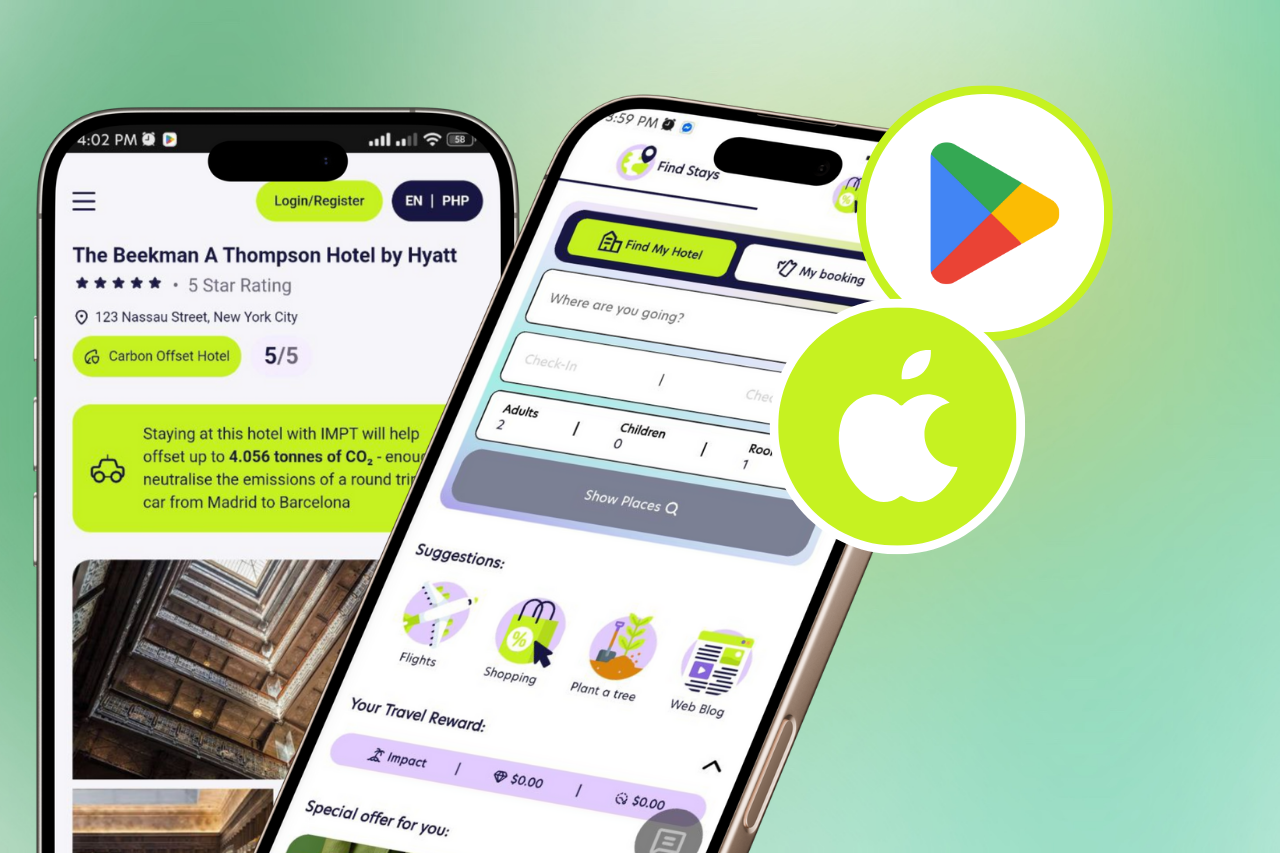
How to Plan a Climate-Smart Honeymoon
Climate-Positive Travel
🌱
Earn carbon credits on your honeymoon bookings
Book 8M+ hotels in 195 countries · Up to 45% cashback.
Your honeymoon can be romantic and low-carbon. It starts with proximity, extends through slow travel, and ends with meaningful stays.
Dear IMPT Family,
The honeymoon is often the most carbon-intensive trip a couple takes. Long-haul flights, remote luxury resorts, week-long island-hopping—the carbon arithmetic is brutal. But a climate-smart honeymoon isn’t joyless or compromised. It’s actually more memorable: slower, more connected, less rushed. You see fewer places more carefully. You eat what grows locally. You stay longer and cheaper. It’s not deprivation; it’s intention.
Here’s how to plan it.
🔥 Key Highlights 🔥
1️⃣ Proximity trumps glamour: a climate-smart honeymoon is often closer than you expected
2️⃣ Slow travel (train over plane, extended stays) cuts carbon while improving experience
3️⃣ Regional retreats (mountain lodges, wine country, countryside) are lower-impact than exotic islands
4️⃣ Off-season travel is cheaper, lower-carbon, and less crowded
5️⃣ Eco-certified accommodations matter, but duration and transport matter more
1️⃣ Start With Proximity
The default honeymoon narrative is tropical and distant: Maldives, Bali, Fiji. All beautiful, all requiring long-haul flights that generate 1–2 tonnes of CO₂ per person each way. A climate-smart approach flips this: what’s beautiful and exotic within 1,000 kilometres of home?
For most Europeans, the answer is: a lot. Spanish coast. Italian wine country. Swiss Alps. Greek islands reachable by train and ferry. For North Americans: the Caribbean or Central America via shorter flights, the US West Coast, or Canada. For Australians: Southeast Asia is closer than the maldives and more culturally rich.
Start by looking regionally. You’ll find places equally romantic for a quarter of the flight carbon.
2️⃣ Use Trains and Slow Boats
If you can reach your destination by train, do so. A honeymoon is one of the few trips where time pressure is low. Take a sleeper train. Watch the landscape change. Arrive rested. Add a night train crossing (Paris to southern Spain, London to Switzerland) and you’ve combined transport with accommodation, saving a hotel night while slashing carbon.
For island destinations that require flying, take a ferry or slow boat between islands instead of island-hopping by air. A ferry generates a fraction of the carbon per passenger compared to a seaplane or short flight.
3️⃣ Choose Regional Retreats Over Exotic Islands
A mountain lodge in the Alps, a villa in Tuscany, a cottage in the Scottish Highlands, a cabin in the Canadian Rockies—these offer romance, seclusion, and natural beauty comparable to distant islands, with a fraction of the carbon. Regional climates mean seasonal food is available locally, landscapes are stunning, and you’re not dependent on air freight for supplies.
These destinations also face less tourism pressure. Your money supports small communities instead of large resort chains. The experience feels more authentic.
4️⃣ Extend the Trip and Visit Off-Season
A two-week honeymoon in shoulder season (spring or autumn) is lower-carbon and cheaper than a week in peak summer. Off-season travel means hotels operate at lower capacity (less energy waste), flights are fuller (better per-person efficiency), and crowds are minimal. You move slowly, eat seasonally, avoid the rush.
Extending duration also amortises transport carbon. A 14-day trip spreads flight carbon across 13 nights of accommodation. A three-day weekend spreads it across two. Longer trips are more sustainable trips.
5️⃣ Pick Accommodations Intentionally
Some honeymoon lodges are genuinely sustainable: regenerative farms with guest cabins, small family-run hotels using renewable energy, mountain lodges minimising impact. Others are greenwashed luxury resorts. Look for:
✔ LEED or Green Key certification
✔ Published energy and water data (not just claims)
✔ Local food sourcing
✔ Minimal single-use plastics
✔ Reasonable scale (under 100 rooms tends to mean lower impact per guest)
But duration matters more than certification. Two weeks at a modest lodge beats one week at a certified luxury resort.
6️⃣ Activities That Align With Impact
A honeymoon should be romantic and memorable. Low-carbon activities often are: hiking, cycling, kayaking, cooking classes, farmer markets, local restaurants, reading together. Avoid helicopter tours, exotic animal encounters, or activities requiring extra transport.
7️⃣ The Offset Opportunity
Even a low-carbon honeymoon likely includes at least one flight. Book through IMPT or similar platforms that let you earn carbon credits on bookings—effectively building offset into the trip automatically. Some couples also choose to offset their honeymoon’s full carbon footprint by supporting verified climate projects (reforestation, renewable energy, carbon capture).
Looking Ahead — A Honeymoon That Feels Right
The best honeymoons are slow, local, and intentional. They cost less, generate memories that last longer, and leave a lighter footprint. They also let you start married life with a shared commitment to the planet. That’s a nice foundation.
Let’s keep building — together. 🌍💚