
Should You Offset Your Flight? An Honest Look
Climate-Positive Shopping
🌱
Earn carbon credits on every euro you spend
Same prices as direct · 25,000+ partnered stores.
The answer is more nuanced than yes or no. But the first question isn’t whether to offset — it’s whether to fly.
Dear IMPT Family,
You book a flight. At the checkout, there’s a button: Add carbon offset? €3 extra. Most people skip it. Some click it to feel better. Few understand what they’re actually doing.
The honest conversation: flights are high-emission events. Offsetting is a real thing you can do. But it’s not magic. And it’s not a substitute for flying less.
Here’s the actual analysis.
🔥 Key Highlights 🔥
1️⃣ A London–New York round trip produces roughly 2 tonnes of CO₂ per passenger
2️⃣ That’s 3–4 weeks of typical UK emissions in a single flight
3️⃣ You can offset it with verified credits (~€30–50 per tonne)
4️⃣ But offsetting doesn’t erase the flight — it just funds a reduction elsewhere
5️⃣ The first lever is: fly less. The second is: offset what you do fly
6️⃣ Some flights (visiting family, work necessity) are more justifiable than others (short-haul leisure)
1️⃣ The Emissions Number
A London–New York round trip is roughly 2 tonnes of CO₂ per passenger. That’s the industry-standard calculation. It’s not guesswork — the International Carbon Offset and Reduction Alliance (ICROA) and ICAO (the aviation regulator) publish methodologies. The UK government’s carbon calculator agrees.
Here’s the scale: the average UK resident emits about 10 tonnes per year. A single transatlantic flight is 20% of your annual budget, burned in 10 hours.
Short-haul flights are better but not great. London to Paris is 0.2 tonnes per person. Still measurable. London to Dublin is 0.08 tonnes. Longer the haul, worse the impact.
2️⃣ Why Flying Is So Emissions-Intensive
It’s not just the fuel. It’s the type of fuel and the altitude of use:
Jet fuel burns differently than ground fuel: Kerosene has higher carbon content per litre than diesel. Planes burn 5–7 litres per passenger per hour on long routes.
High-altitude emissions count more: CO₂ released at 35,000 feet has greater radiative forcing (warming effect) than the same CO₂ at ground level. The Radiative Forcing Index multiplier is 2–3, meaning high-altitude emissions should count as if they were 2–3 times heavier. Airlines don’t always include this in their calculations. The real impact of a flight might be 2x the simple calculation.
No immediate alternatives: You can switch your electricity to renewable. You can drive electric. You can’t fly electric commercially yet. Your options for lower-emission flying are: fly less, or pay for offset.
3️⃣ The Offset Math
You’ve booked a London–New York flight. 2 tonnes CO₂. You buy 2 tonnes of carbon credits at €30 per tonne. That’s €60, or roughly 5% of your flight cost.
Those credits fund, say, a forest conservation project. The project’s 2 tonnes of carbon sequestration gets credited, verified, and retired on your behalf. You’ve paid someone to reduce emissions you can’t.
Here’s the honest part: You haven’t stopped emitting. You’ve paid for someone else to reduce.
If that reduction wouldn’t have happened otherwise (the “additionality” question), it’s a real gain. The atmosphere gets 1 tonne less CO₂ total.
If the reduction would have happened anyway, you’ve just paid for something that was going to happen regardless. The net impact is zero.
This is why offset quality matters. A €5 offset might be buying cheap, risky credits. A €50 offset is buying verified, high-confidence credits. You get what you pay for.
4️⃣ The Moral Question Most People Don’t Ask
Here’s the uncomfortable bit: offsetting feels like absolution. You fly. You feel guilty. You buy an offset. You feel better. The carbon concern is “solved.”
But it’s not solved for you. It’s solved for someone else. You’ve outsourced your emissions, not eliminated them.
This isn’t inherently wrong. Outsourcing emissions to forest projects that bring jobs and ecosystem benefit to developing countries is better than nothing. It’s a real transfer of wealth funding climate action.
But it can also enable you to keep flying more, thinking that each flight is “offset.” That’s a problem.
5️⃣ The Hierarchy of Choices
Here’s how to actually think about flights:
Tier 1 — Don’t fly: If the trip isn’t necessary, don’t go. This is the highest-impact choice. A flight not taken is a flight not emitted.
Tier 2 — Fly less: If you’re going to fly, reduce frequency. Instead of 3 trips per year, do 2. Instead of flying for a weekend, fly for a week. Spread the per-trip emissions over longer, deeper experiences.
Tier 3 — Fly smarter: Choose direct flights (takeoffs and landings are high-emission). Sit in economy (first class spreads the same aircraft’s emissions over fewer people). Fly during off-peak (trains during congested routes).
Tier 4 — Offset: After you’ve done all of the above, offset the flights you do take.
Most people skip to Tier 4 without doing 1–3. That’s moral licensing — doing one small good thing so you can keep doing bigger bad things.
6️⃣ Some Flights Are More Defensible Than Others
Not all flights are equal. Some are worth their carbon cost. Some aren’t.
More defensible:
✔ Visiting family you see once a year
✔ Work travel that generates significant income
✔ Research or documentation for something that has broader impact
✔ Once-in-a-lifetime experiences with deep personal meaning
Less defensible:
✔ Short-haul leisure trips (often trainable)
✔ Flying instead of working remotely
✔ Multiple short trips per year instead of one longer one
✔ Flying for a 2-day conference you could have attended virtually
If you’re in the “less defensible” category, offsetting is a start. But the real answer is: don’t.
If you’re in the “more defensible” category, offsetting makes sense. You’re flying because something matters. You’re paying to reduce emissions elsewhere. That’s a reasonable trade.
7️⃣ How to Actually Offset If You Do Fly
If you decide a flight is necessary and you want to offset it:
✔ Buy verified offsets (Verra, Gold Standard, ACR certified)
✔ Budget €50 per tonne minimum — cheaper than that, you’re skimming quality
✔ Choose forest or removal projects, not just renewable energy avoidance (we have too many avoidance credits already)
✔ Check the project registry — verify it’s real
✔ Retire the credits immediately, don’t hold them as an investment
Airlines often offer offsets at checkout. Some are good (properly verified, immediately retired). Some are vaporware. If your airline doesn’t clearly state which standard backs their offsets, buy elsewhere.
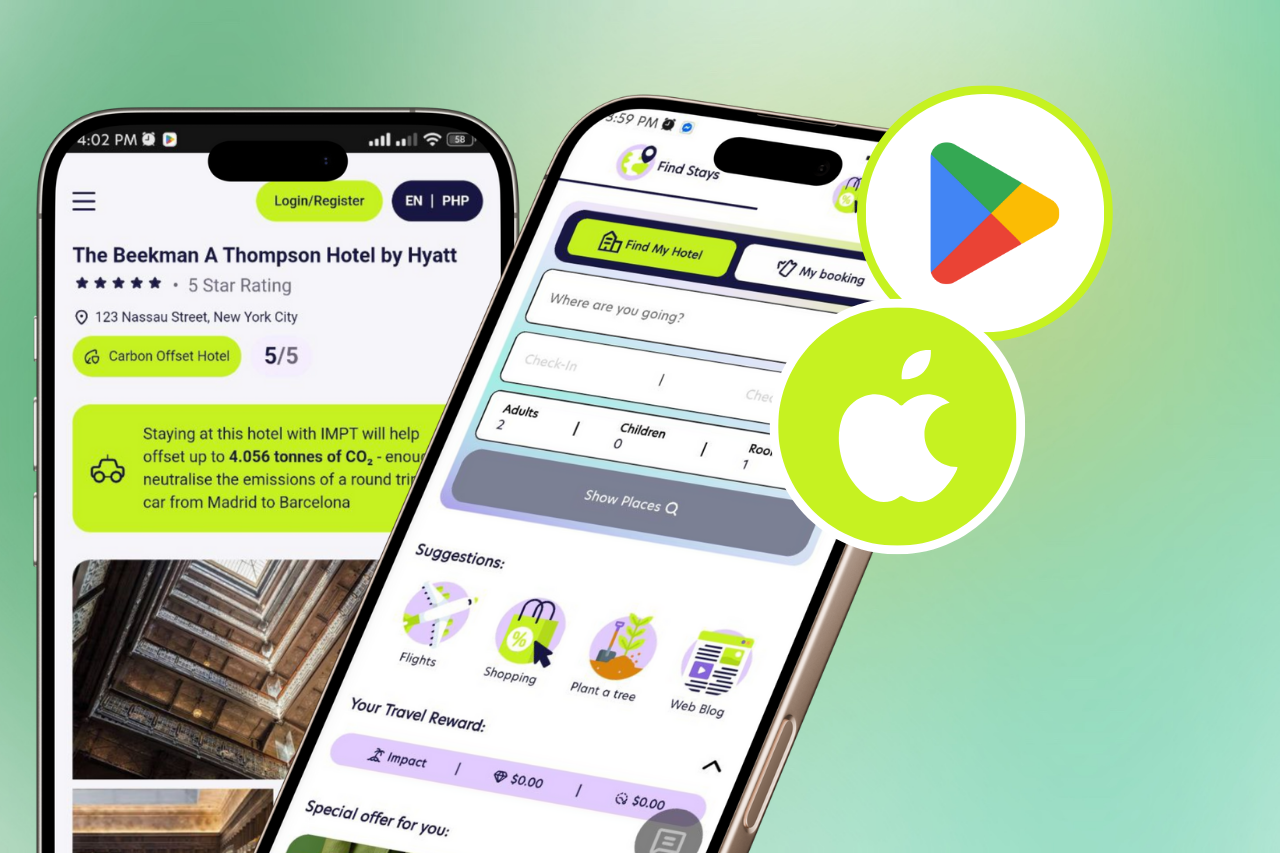
IMPT works with verified projects. If you fly and want to offset, funding through IMPT by shopping afterwards actually creates ongoing offset funding, not just one-time compensation for a single flight.
8️⃣ The Uncomfortable Truth
The honest climate math: if you fly more than twice a year for leisure, offsetting doesn’t solve it. You’re still emitting too much. Offsetting is an individual-level band-aid on a systems-level problem.
The systems-level solution is: flying becomes expensive (carbon tax), so people fly less. Or we have synthetic jet fuel or electric planes. Or we decide remote work is acceptable and don’t need in-person conferences every quarter.
Until then: fly less. When you do fly, offset it. Understand that offsetting is real but not absolution.
Looking Ahead — The True Cost of Flying
Some airlines are starting to include carbon pricing in base fares. They’re saying: the price of a flight includes the cost of offsetting it. This is more honest than making it optional.
Eventually, most regions will either tax aviation carbon or require all airlines to offset. When that happens, offsetting becomes non-negotiable. For now, it’s optional. Use that optionality to choose consciously.
Let’s keep building — together. 🌍💚