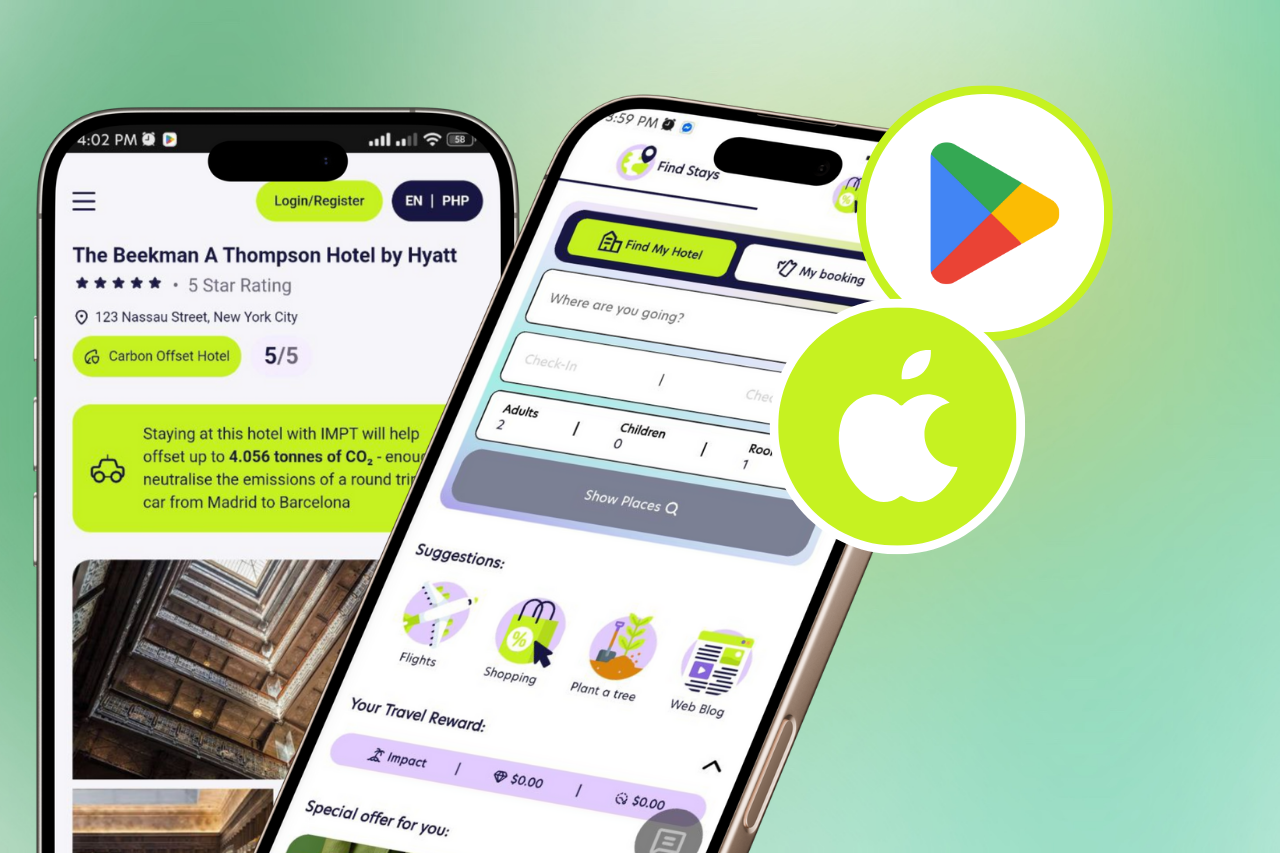
The IMPT Enterprise Carbon Engine is reshaping how organizations manage their carbon footprint from travel. By automatically tracking, offsetting, and reporting carbon emissions with blockchain-verified transparency, IMPT offers businesses a streamlined path to sustainability. This article examines what the Enterprise Carbon Engine monitors, its significance, and how IMPT is raising the bar for corporate climate action.
The Challenge of Corporate Carbon Tracking
Successful corporate carbon tracking operates within the framework of established environmental standards—a necessity in today’s intricate regulatory landscape. The Greenhouse Gas Protocol outlines three key categories:
- Scope 1: Direct emissions from company-owned operations (e.g., fuel combustion in facilities and vehicles).
- Scope 2: Indirect emissions from purchased electricity, heating, or cooling consumed by the company, tied to energy consumption.
- Scope 3: All other indirect emissions across the value chain, such as employee travel—traditionally the hardest to quantify due to their dependence on external variables like travel mode and distances.
Scope 3 emissions often comprise the largest share of total greenhouse gas output and pose the most significant measurement challenges. As ESG (Environmental, Social, and Governance) priorities intensify, organizations face mounting pressure from investors, regulators, and consumers for transparent and comprehensive reporting across all scopes.
Manual data collection and fragmented systems contribute to inefficiencies and inaccuracies in carbon accounting. Automation is vital, and the IMPT Enterprise Carbon Engine meets this need by centralizing and streamlining data collection, analysis, and emissions tracking.
The Role of Carbon Offsetting and Verified Credits
Achieving ESG compliance goes beyond tracking emissions—it also involves neutralizing them through carbon offsetting. Investments in external projects yield verified carbon credits, which offer companies an auditable way to neutralize their emissions footprint. However, legacy offsetting models can suffer from double-counting and traceability issues.
IMPT addresses this by introducing NFT-based carbon credits, leveraging blockchain for full traceability and credibility. Each NFT credit is uniquely tracked and verifiable, reducing risks and enhancing stakeholder trust, while combating issues like double-counting and improving sustainable claims transparency.
With this robust, automated foundation, IMPT enables organizations not just to simplify compliance, but to engage authentically and verifiably in their sustainability journey—articulating their impact clearly to all stakeholders.
Key Concepts Behind the Enterprise Carbon Engine
The IMPT Enterprise Carbon Engine is built around foundational concepts essential for effective, compliant emissions tracking in line with ESG standards.
Understanding Emissions Scopes
– Scope 1: Direct emissions from owned or controlled sources.
– Scope 2: Indirect emissions from purchased utilities.
– Scope 3: Indirect value chain emissions, such as those from business travel, logistics, and end-of-life product disposal.
Tracking Scope 3 requires integrating data from numerous sources and adopting advanced methodologies, making it crucial for organizations to automate data collection and analysis to ensure transparent reporting.
Carbon Offsetting and Verified Credits in Practice
Carbon offsetting allows businesses to compensate for their emissions by supporting externally validated reduction or sequestration projects. Verified carbon credits provide a quantified, recognized reduction in emissions and are key to aligning with global sustainability goals and credible reporting. As described in industry research from McKinsey & Company, scaling voluntary carbon markets is crucial for effective climate impact.
The Power of NFT Carbon Credits
NFT carbon credits use blockchain to assign each credit a unique, traceable, and non-reusable identity. This innovation ensures transparency, prevents double-counting, and supports verifiable, trustworthy reporting—an essential aspect for all organizations subject to increasing investor and public scrutiny.
By embedding these features within its core, IMPT enables automated and accountable reporting—arming companies with real-time data they can trust and ensuring their sustainability practices set them apart in the corporate sector. To dive deeper into IMPT’s technological framework, see our IMPT Whitepaper.
How IMPT Automates Emissions Tracking and Offsetting
IMPT’s Enterprise Carbon Engine brings automation to the forefront, transforming sustainability into an effortless component of business travel management.
Precision Tracking and Calculation
IMPT leverages advanced algorithms taking into account variables like hotel size, location, offered services, and stay duration. Emissions estimates—starting with an average of 50kg CO₂ per hotel stay—are refined for each booking, giving accurate, actionable insights into a company’s travel-related carbon footprint.
Automation of Offsetting and Transparent Workflows
Post-booking, every travel event is automatically linked to certified environmental projects, offsetting emissions at no additional user cost. Each booking triggers emissions calculation, offset assignment, NFT credit issuance, and a “burn” event—every step verifiable on the Ethereum blockchain for full transparency.
This seamless booking-to-offset integration means businesses comply with sustainability requirements with zero workflow disruption. For more on how blockchain tokens operate in this ecosystem, visit IMPT Token.
Visualizing the User Journey
Users benefit from intuitive dashboards and visuals summarizing the emissions tracking, offset assignments, and blockchain-confirmed credits. These tools empower organizations to communicate their sustainability journey effectively both internally and externally.
This precise, automated process not only supports compliance but directly facilitates positive environmental outcomes, reducing administrative burden and boosting impact.
IMPT’s Blockchain-Verified Sustainability Advantage
IMPT’s use of blockchain sets a new standard for transparency, accountability, and regulatory compliance in corporate travel carbon management.
NFT Carbon Credits and Token Burn Mechanism
Each carbon credit issued through IMPT is minted as a unique NFT on the Ethereum blockchain, providing exclusive traceability and ownership, which is critical for eliminating double-counting and substantiating offset claims. Token burning—reducing the circulating IMPT supply as credits are used—further establishes value and scarcity, incentivizing environmental engagement for all stakeholders.
Regulatory Alignment and Corporate Advantage
Blockchain-verified offset records equip companies to confidently report adherence to ESG standards, including emerging EU requirements. Access to precise, quantifiable metrics strengthens sustainability narratives and regulatory readiness, giving businesses a competitive edge and positive public image.
Case Study Highlights and Global Applications
Organizations across India, Colombia, and Europe use IMPT to meet legislative requirements and elevate their standing as climate leaders. Blockchain technology guarantees the legitimacy of their efforts, underlining the global applicability and effectiveness of IMPT’s solution. Learn more about the company’s mission and broader ESG solutions on our About Us page.
IMPT’s system empowers companies to simplify and legitimize sustainability efforts, turning corporate travel into an accessible and integral part of climate action strategies.
From Onboarding to Ongoing ESG Success
IMPT’s user journey is designed for rapid, intuitive onboarding. Employees receive step-by-step guidance and incentive-based access (such as coupon codes) to streamline initial engagement.
Automated Management and Streamlined Administration
After completing 20 bookings, organizations unlock domain-based automation, enjoying streamlined corporate rates and reducing the administrative workload for travel managers. Comprehensive dashboards provide instant visibility into travel volumes, budgets, and approval workflows.
Employee Engagement and Integration
Employees can leverage corporate rates even for personal travel, encouraging wide adoption of sustainable booking behaviors. This drives a culture of sustainability and boosts employee morale, creating a positive feedback loop where every participant contributes to corporate climate objectives.
Seamless Integration and White-Label Solutions
With options for white-label integration and robust APIs, IMPT can slot easily into existing travel management or HR systems, ensuring organizations of all sizes benefit without disrupting daily operations.
Altogether, IMPT’s structured onboarding and ongoing management tools support companies in achieving, tracking, and reporting ESG progress, driving continuous improvement in sustainable travel practices.
Quantifying Impact: Metrics, Reporting, and Real Results
The IMPT Enterprise Carbon Engine delivers actionable, accurate metrics to inform sustainability strategies and prove impact.
Core Impact Metrics
- Total CO₂ Offset: Measures the amount of carbon emissions neutralized via verified projects.
- Tokens Burned: Indicates cumulative, irreversible impact through blockchain token mechanics.
- Projects Funded: Details the array of supported environmental initiatives.
- ESG Score Improvements: Tracks quantifiable progress in sustainability standards.
- Comprehensive Audit Trails: Provides regulatory-grade transparency.
Real-Time Dashboards and Reporting Features
IMPT equips organizations with automatically generated, ESG-compliant reports, real-time data dashboards, and stakeholder-ready infographics. These tools transform complex sustainability reporting into clear insights, enabling faster decision making and fostering a stronger culture of accountability among both leaders and employees.
Broad Global Reach
Operating across over 7 million hotels and 20,000+ retail partners in 195 countries, IMPT’s platform helps integrate sustainable travel practices on a truly global scale. In 2022 alone, approximately 238 million tokens were burned—demonstrating a tangible, worldwide commitment to environmental protection.
By combining detailed metrics with broad reach, IMPT’s solution drives measurable progress toward corporate climate objectives. For answers to common questions about implementation, see our IMPT FAQs.
Addressing Challenges and Limitations
While the IMPT Enterprise Carbon Engine offers a robust foundation for sustainable corporate travel, it’s important to recognize key challenges and limitations.
Data Accuracy and Estimation Variability
Emission calculations depend heavily on the quality and completeness of input data. Discrepancies or gaps can reduce precision, which IMPT addresses through enhanced data validation and guidance for optimal user input.
Access Thresholds and Flexibility for Smaller Companies
Full feature access currently requires a minimum of 20 bookings, which may limit utility for smaller businesses. IMPT is working toward more flexible options to ensure wide applicability for organizations with varying travel volumes.
Coverage Limitations for External Bookings
Only travel booked within the IMPT ecosystem is automatically offset—organizations booking externally must manage their offsets separately. To simplify this, IMPT is pursuing broader partnerships and potential integrations.
Token Economics and Market Variability
IMPT token pricing is influenced by market factors and deflationary models, which can impact budgeting and planning for offsetting activities. IMPT maintains transparency around token economics and regularly updates users on pricing impacts.
IMPT views these challenges as opportunities for ongoing refinement, continually responding to user feedback and technological advances to better serve diverse business needs.
Why the IMPT Enterprise Carbon Engine Sets a New Standard
IMPT’s Enterprise Carbon Engine reimagines sustainable travel, making responsible practices automatic rather than optional. The platform’s sophistication lies in precise emissions tracking across air, hotel, and local transport—enabling businesses to swiftly pinpoint opportunities for reduction and impact.
Seamless Integration, Automation, and Trust
Strong blockchain integration ensures every transaction is transparent, secure, and verifiable—powerful reassurance as sustainability claims face growing scrutiny. Automated tracking and offsetting free employees from manual processes, efficiently scaling climate-positive behaviors across entire organizations.
IMPT’s engine is designed to be regulatory-ready, helping organizations comply with current and emerging ESG demands and position themselves at the forefront of sustainability leadership.
Catalyst for Authentic Climate Action
As pressures mount from climate change and regulations tighten, adopting a platform like IMPT is no longer a choice but a strategic necessity. IMPT empowers businesses and their people to become active climate contributors, seamlessly aligning day-to-day travel decisions with long-term environmental commitments.
Ultimately, the IMPT Enterprise Carbon Engine is more than a compliance solution—it’s a strategic driver for real environmental impact, accountability, and future-proof business growth.
Conclusions
IMPT’s Enterprise Carbon Engine transforms corporate travel into a verifiable sustainability solution, automating emissions tracking and offsetting with blockchain technology. By fulfilling ESG requirements, delivering clear impact metrics, and preparing companies for regulatory changes, IMPT introduces a new era of effortless, auditable, and impactful climate action at the core of business operations.
To explore how IMPT can elevate your organization’s sustainability initiatives, explore more at our B2B solutions page.
Written by James Reynolds, Blockchain Analyst at impt.io