There’s a moment — somewhere between dropping into a loamy singletrack descent and catching your first glimpse of the Mont Blanc massif — when La Plagne stops feeling like a ski resort and starts feeling like mountain biking paradise. Ten villages spread across 2,000 metres of vertical, a bike park that’ll keep you grinning for days, and trails that stretch into the Paradiski link with Les Arcs. If you haven’t considered La Plagne for your next summer MTB trip, you’re sleeping on one of the French Alps’ most underrated riding destinations.
This guide covers everything: the trails, the terrain, how to get there, when to go, and how to book accommodation without paying full price (or ignoring your carbon footprint, for that matter). Strap in.
What Makes La Plagne a Mountain Biking Destination Worth Your Time
La Plagne sits in the Tarentaise valley in Savoie, and its geography is immediately obvious the moment you look at a trail map. This is big mountain terrain. The resort’s ten villages — from the purpose-built altitude stations like Plagne Bellecôte and Belle Plagne down to the lower, more traditional villages of Montchavin and Champagny-en-Vanoise — give riders an enormous amount of vertical to play with.
What separates La Plagne from some of its flashier neighbours is variety. You’ve got dedicated bike park infrastructure with uplift, proper enduro routes connecting villages, cross-country trails that push into genuinely remote terrain, and — via the Paradiski gondola link — access to Les Arcs, which has its own formidable MTB offering. For a single-resort trip that refuses to get boring, it’s hard to beat.
The landscape itself is motivating in a way that’s difficult to explain until you’re riding it. Alpine meadows, dense pine forests, exposed ridgelines with views that stretch into Switzerland on a clear day. La Plagne doesn’t just give you trails — it gives you a reason to push harder so you can spend more time up top.
The Trails: What You’ll Actually Be Riding
La Plagne’s trail network centres around the Bike Park at the top of the resort, but extends well beyond it. The bike park operates during summer with gondola access, offering dedicated downhill runs from beginner green routes to full-on black DH lines with technical rock gardens and steep chutes.
For enduro riders, the real prize is the network of marked trails connecting the upper villages to the valley. These are multi-kilometre descents with sustained technical sections — think chunky roots, natural berms carved by decades of snowmelt, and those sudden exposed traverses that remind you exactly how high up you are.
The Paradiski extension is worth planning a day around. The gondola link to Les Arcs opens up a completely different aspect of the mountain, with trails dropping toward Bourg-Saint-Maurice. It’s a full day out — potentially 2,500+ metres of descending — and one of the most memorable rides in the Alps.
For riders who prefer to pedal their own uphill, there are marked cross-country loops at various difficulty levels, including some genuinely accessible routes around the lower villages that are perfect for a day where the legs are heavy but the head still wants to be out.
Difficulty Breakdown: Finding Your Level at La Plagne
Green trails at La Plagne are genuinely beginner-friendly — wide, with manageable gradient and good sight lines. If you’re bringing a partner or kids who are newer to mountain biking, there are options here that won’t terrify anyone on day one.
Blue and red trails are where the majority of intermediate riders will spend most of their time, and this is La Plagne’s sweet spot. The red-rated runs in the bike park have enough flow and features to keep experienced riders engaged without punishing anyone who’s still developing technical skills.
Black runs in the bike park are serious. We’re talking steep, sustained descents with loose over hard conditions on some sections, significant drops, and the kind of rock gardens that will find gaps in your technique immediately. If you’re eyeing these, hit the reds first and get a feel for the local soil.
The enduro routes — particularly anything connecting the upper stations to Montchavin or Champagny — are graded separately and tend to be more physically demanding than the park runs. You’ll want reasonable fitness and solid technical skills for the full valley descents.
Best Season to Ride La Plagne
July and August are peak MTB season at La Plagne. The gondolas run for uplift, the trails are at their best after spring snowmelt has settled the dust and the vegetation has grown in, and the weather — while never guaranteed in the Alps — is at its most reliable.
Late June can be excellent if the snowpack has been light, giving you early-season trail conditions with smaller crowds. September is arguably the best kept secret in French Alps mountain biking: the tourists thin out significantly, the temperatures drop into a very comfortable riding range, and the autumn light on the mountains is something else entirely.
Avoid May and early June — trails at altitude can be snow-covered or saturated, and the bike park infrastructure won’t be running.
Getting There and Getting Around
La Plagne is most easily accessed via Geneva or Lyon airports, with transfers to the resort taking roughly two to three hours. Bourg-Saint-Maurice is the nearest train station, connected to the lower villages by local buses and taxis. If you’re driving, parking in the lower villages is significantly easier than the altitude stations, and cable car access up the mountain works well for bike transport.
Hiring bikes locally is absolutely viable — there are solid rental shops in several of the villages — but if you have a well-fitted personal bike, La Plagne’s trail character rewards knowing your equipment.
Where to Stay in La Plagne: Book Smart with IMPT
Accommodation in La Plagne ranges from budget apartments in the lower villages to mid-range chalets in Belle Plagne and higher-end options at altitude. For mountain bikers, positioning matters: staying in one of the upper villages means easier gondola access and shorter rides to trailheads, while the lower villages offer more traditional alpine character and often lower prices.
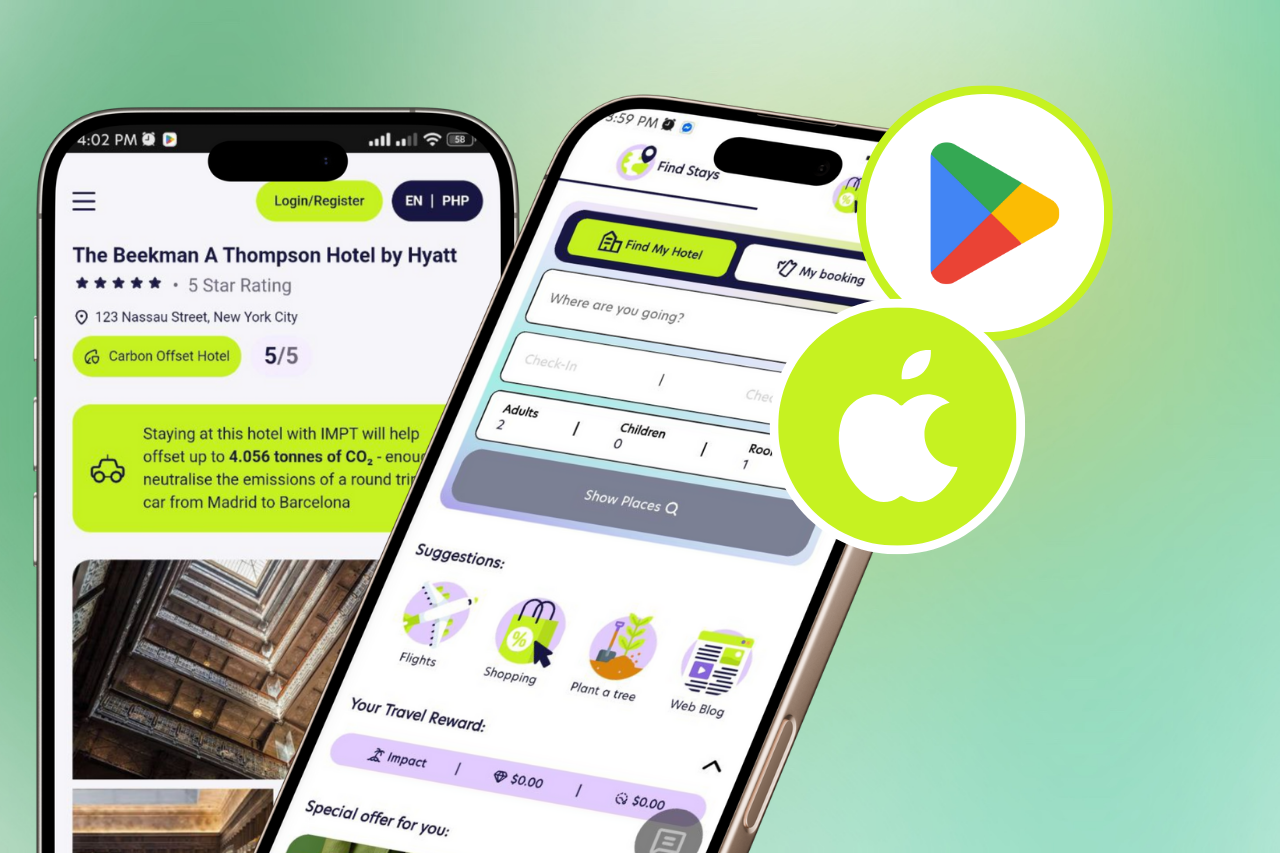
Here’s something worth knowing before you book: if you search hotels through impt.io, every booking earns you back roughly 5% of the total as on-chain carbon credits — retired in your name. For a trip to the Alps (where your flight already carries a carbon cost you can’t fully dodge), booking somewhere that actively offsets that impact feels like the right call. Mountain bikers more than most people understand what’s at stake when alpine ecosystems degrade.
Search available hotels in La Plagne at https://app.impt.io/find-hotel-input — the platform covers a solid range of properties at various price points, and the carbon credit return is automatic with every booking.
Conclusion
La Plagne rewards riders who come prepared and stay curious. It’s not trying to be Morzine or Les Gets — it has its own character, its own pace, and its own kind of trail magic that you won’t find anywhere else in the Paradiski. Whether you’re chasing bike park laps, planning a multi-day enduro traverse, or simply want to be above 2,000 metres on two wheels with nowhere to be for a week, La Plagne delivers.
Start planning your trip — search hotels at https://app.impt.io/find-hotel-input and lock in your base before the summer slots fill up.