SUMMER 2026 · 6 destinations

Eco Summer in Slovenia.

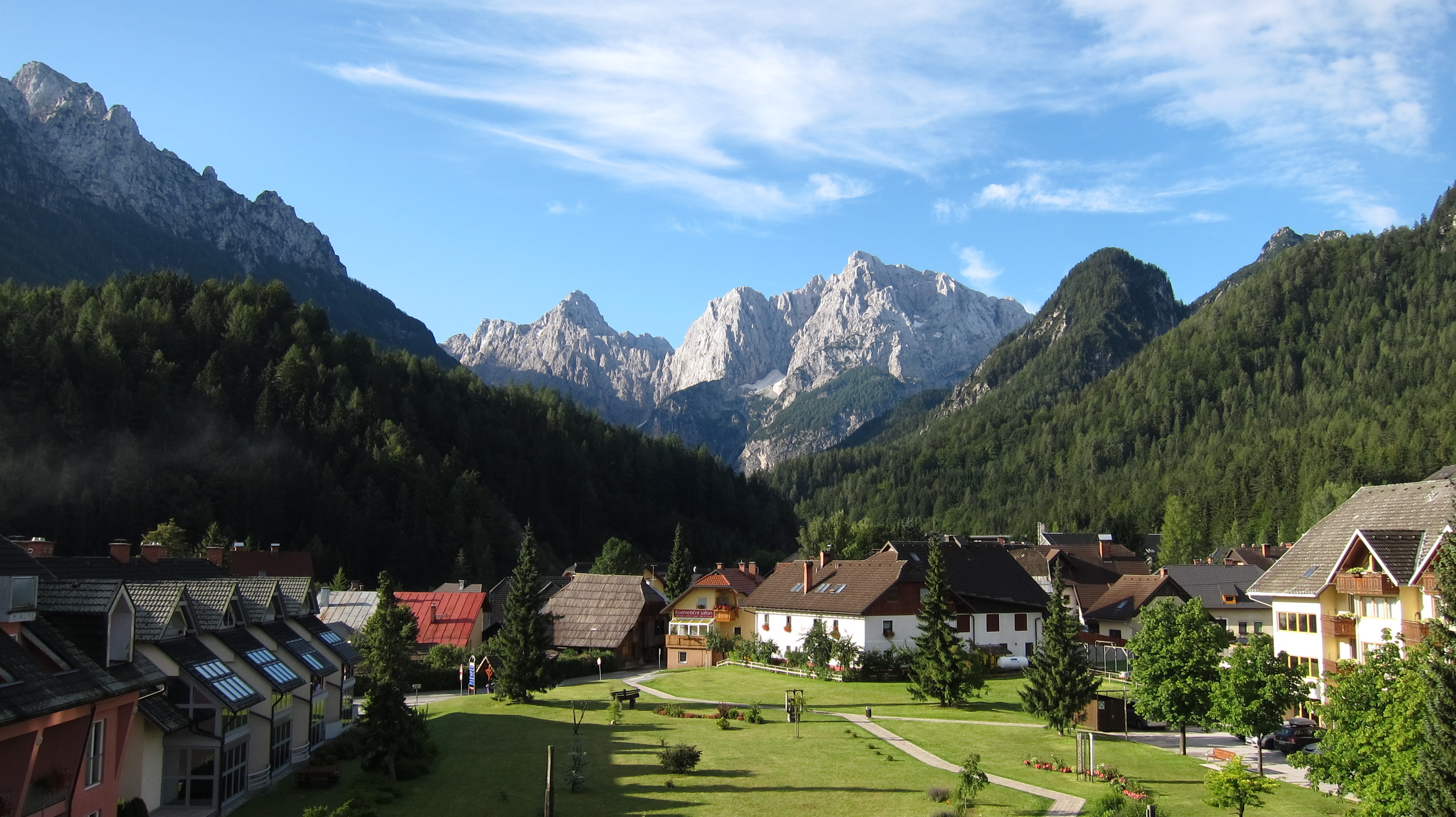
The Julian Alps, a 47 km Adriatic coast, Triglav National Park, and Europe's first capital to win Green Capital status under 300,000 population — six Slovenian destinations where summer 2026 can be both unforgettable and carbon-balanced.

6 destinations 1 ton CO₂ removed per booking 100% UN-verified
Find your Slovenia eco-stay →

Same price as direct · 1 ton CO₂ removed per booking

Slovenia was the first EU member state to commit to full climate-neutrality by 2050, and Ljubljana won the European Green Capital award in 2016 — making it one of the smallest capitals ever to take the title. The country runs on a mix of hydropower (about a third of generation), nuclear (Krško) and growing solar, and the rail and bus network connecting the Alps to the 47 km Adriatic coast is one of the most carbon-efficient public-transport systems in Central Europe. Add Triglav National Park, two of the cleanest mountain lakes in the EU, and a hospitality sector with an unusually high Green Key density — and Slovenia is the most concentrated low-impact summer destination on the continent.

Every reservation below removes one verified ton of CO₂ through IMPT's offset programme — paid from our commission, never added to your bill. Slovenia uses the Euro, drives on the right, and the country is so compact you can reach the Adriatic from the Alps in 90 minutes by car. The six destinations span the capital (Ljubljana), the alpine lakes (Bled, Bohinj, Kranjska Gora), the wine east (Maribor) and the Adriatic (Piran) — each picked for sustainability infrastructure as much as for views.

Top 6 eco destinations in Slovenia

Ljubljana eco-travel in Slovenia #1
Centre

Ljubljana

Ljubljana was named European Green Capital in 2016 after pedestrianising its entire historic centre — the Ljubljanica embankment is now car-free, and the city is criss-crossed by 230 km of bike lanes. Tivoli Park forms a green wedge that runs directly into the Old Town, and most central hotels run Green Key or EU Ecolabel certifications. Use it as the base for day trips north to the Alps and south to Postojna.

Highlights: Ljubljanica embankment & Triple Bridge · Ljubljana Castle funicular · Tivoli Park & Tivoli Mansion · Metelkova alternative quarter

Best: May–Sep Browse stays →
Lake Bled eco-travel in Slovenia #2
Alps

Lake Bled

The most photographed lake in the Alps — a 2 km-long glacial mirror with a baroque church on a tiny island and a clifftop castle above. Bled bans motorised boats on the lake (only traditional rowed pletnas and electric craft), and the surrounding hotels are concentrated in a small footprint that's been carefully managed since the 1960s. The Vintgar Gorge boardwalk and the cycling loop to Lake Bohinj are the two best day trips.

Highlights: Pletna boat to Bled Island · Bled Castle viewpoint · Vintgar Gorge boardwalk · Cycling loop to Bohinj

Best: May–Sep Browse stays →
Piran eco-travel in Slovenia #3
Coast

Piran

Slovenia's 47 km Adriatic coast is the shortest of any sea-facing country in the EU — and Piran is its Venetian masterpiece. The medieval old town juts out on a peninsula with Tartini Square at its heart, and the entire historic centre is car-free. The Sečovlje salt pans south of town are a Ramsar wetland still harvested by hand, and several Piran boutique hotels source produce directly from them.

Highlights: Tartini Square & St. George's · City walls panoramic walk · Sečovlje salt pans · Strunjan Nature Reserve

Best: May–Sep Browse stays →
Bohinj eco-travel in Slovenia #4
Alps

Bohinj

The quieter, larger, wilder cousin of Bled — Lake Bohinj sits entirely inside Triglav National Park, the only national park in Slovenia. Swimming is permitted everywhere, the Savica waterfall is a 30-minute hike from the lake's western end, and the Vogel cable car climbs to 1,535 m for panoramic Julian Alps views. The hotels here are smaller, family-owned, and most run on park-mandated waste-water and noise rules.

Highlights: Lake Bohinj swimming · Savica waterfall · Vogel cable car & ridge walks · Mostnica Gorge

Best: May–Sep Browse stays →
Maribor eco-travel in Slovenia #5
East

Maribor

Slovenia's second city sits on the Drava river, with the world's oldest cultivated grapevine (the Stara Trta, 450+ years old) still producing wine on a riverside house wall. Maribor is the gateway to the Pohorje range — Slovenia's most extensive lift-served walking and biking territory — and to the Styrian wine roads. The city won the European Capital of Culture title in 2012 and has invested heavily in green riverbank restoration since.

Highlights: Stara Trta (oldest grapevine) · Lent district & riverfront · Pohorje cable car · Štajerska wine roads

Best: May–Sep Browse stays →
Kranjska Gora eco-travel in Slovenia #6
Alps

Kranjska Gora

Slovenia's premier alpine resort, tucked into the corner where Italy, Austria and Slovenia meet. Kranjska Gora is a ski town in winter and a hiking and cycling base in summer — the Vršič Pass climbs 1,611 m through 50 switchbacks into Triglav National Park, and the Jasna lake at the village edge is a swimming-quality alpine pond. Hotels here cluster around the Travelife standard and the Slovenia Green destination label.

Highlights: Vršič Pass road & 50 switchbacks · Jasna alpine lake · Tamar valley hike · Planica ski-jump centre

Best: May–Sep Browse stays →

Why summer eco-travel in Slovenia?

Slovenia sits at the structural intersection of an early-mover climate commitment (the first EU state to legislate climate-neutrality by 2050), a hospitality sector with the highest Green Key density per capita in Central Europe, and a public-transport network that makes Alps-to-Adriatic travel possible in 90 minutes without a car. Triglav National Park covers roughly 4% of the country and protects the headwaters of both the Sava and the Soča. Ljubljana's Green Capital legacy continues to push the city toward zero-waste targets, and the Slovenia Green destination scheme certifies 60+ municipalities. IMPT layers a UN-verified 1-ton CO₂ removal on every booking — at no extra cost, paid from our commission.

Frequently asked questions

When is the best time to visit Slovenia for a sustainable summer?

June and September are the sweet spot — the alpine lakes are warm enough to swim, the coast is pleasant, and most hotels offer their best rates. July and August see the heaviest Italian and Austrian crossings, particularly at Bled and Bohinj. The shoulder weeks also avoid the Vršič Pass traffic peaks.

How do I travel between Slovenian destinations without a car?

Slovenia's rail network connects Ljubljana to Maribor, Koper (a 20-minute taxi from Piran), Bled-Jezero and Bohinjska Bistrica. Buses fill the gaps to Kranjska Gora, Lake Bled village and Bohinj. A Slovenia rail+bus combo ticket covers most routes, and per passenger emits 70–80% less CO₂ than the equivalent rental car day.

Are eco-hotels in Slovenia more expensive than regular hotels?

No. Booking through IMPT costs the same as booking direct — the carbon removal is paid from IMPT's commission, not added to your bill. Slovenian hotel rates are competitive with Austria and Italy but generally 15–25% lower at the same star level, especially in Maribor and on the coast outside July–August.

Which Slovenian destination is best for first-time visitors?

Ljubljana + Bled + Piran is the classic three-base combination, all reachable in a 4–5 night trip. Spend two nights in the capital, two at the lakes (Bled or Bohinj), and one or two on the Adriatic. Add Kranjska Gora and the Vršič Pass if you have a full week and a car.

How does IMPT make a Slovenian hotel booking carbon-neutral?

Every reservation triggers a verified one-tonne CO₂ removal — UN-certified, paid from our commission. The offset is sourced from a portfolio of reforestation and renewable-energy projects in the Mediterranean basin and East Africa, and is enough to fully balance a typical short-haul flight to Ljubljana plus a 4-night stay. See how we carbon-balance every stay.

What is the Slovenia Green destination scheme?

A national certification administered by the Slovenian Tourist Board that audits municipalities and accommodations against an extended set of GSTC (Global Sustainable Tourism Council) criteria. Ljubljana, Bled, Bohinj, Piran and Kranjska Gora all hold Green Destination Gold or Platinum status — meaning waste, water, transport and community indicators are externally verified.

Plan a Slovenia summer that gives back

Same price as direct booking. No hidden fees. Every reservation removes one UN-verified ton of CO₂ — paid from our commission, never added to your bill.

Search 6 Slovenia destinations →