SUMMER 2026 · 7 destinations

Korean Summer in South Korea.

The KTX bullet-train network that connects almost the entire country in under three hours, hanok wooden inns rebuilt on traditional ondol heating, and an island that aims to run entirely on wind and solar by 2030 — seven Korean destinations where summer 2026 can be both unforgettable and carbon-balanced.

7 destinations 1 ton CO₂ removed per booking 100% UN-verified
Find your South Korea eco-stay →

Same price as direct · 1 ton CO₂ removed per booking

South Korea is building one of Asia's most ambitious clean-energy plans — the official target is more than 30% renewable electricity by 2030, with offshore wind ramping up along the south coast, the world's largest tidal power station already running at Sihwa, and Jeju Island on track to be the country's first 100% renewable region. The KTX high-speed rail network links Seoul to Busan, Mokpo and Gangneung at over 300 km/h on certified clean electricity, and the Seoul and Busan metro systems are among Asia's most efficient. Add hanok — the traditional wooden inn with low-energy ondol underfloor heating — as a serious low-impact alternative to chain hotels, and Korea is a structurally easy country to travel cleanly.

Every reservation below removes one verified ton of CO₂ through IMPT's offset programme — paid from our commission, never added to your bill. The seven destinations span the capital and the surrounding metro (Seoul, Incheon), the southern coast (Busan), the wind-and-solar island of Jeju, the historic capitals (Gyeongju, Andong) and the central food city of Daegu — each picked for KTX access and certification depth as much as for character.

Top 7 eco destinations in South Korea

Seoul eco-travel in South Korea #1
Capital

Seoul

A 600-year capital that now runs one of the world's densest metro networks (23 lines, all electric) alongside one of its most progressive city climate plans — the Cheonggyecheon stream restoration removed a 6-km elevated motorway and put a public park in its place. Seoul's neighbourhoods range from the hanok village of Bukchon to the design quarter of Seongsu and the embassies of Itaewon. Most international hotels carry Green Key or LEED certification, and the city is committed to 70% emissions cuts by 2030.

Highlights: Gyeongbokgung Palace & Bukchon hanok village · Cheonggyecheon stream · Namsan Tower & N Seoul park · Seongsu design district

Best: May, Sep–Oct Browse stays →
Busan eco-travel in South Korea #2
South-east

Busan

Korea's second city and its biggest summer beach destination — Haeundae and Gwangalli on the east, the Jagalchi fish market and the painted hillside village of Gamcheon on the west, and the 7-km Igidae coastal trail in between. Busan runs one of Asia's largest port-electrification projects (cold-ironing for cruise ships), the KTX from Seoul takes 2 hours 15 minutes city-centre to city-centre, and the Busan Cinema Center anchors a film festival district that hosts BIFF every October.

Highlights: Haeundae & Gwangalli beaches · Gamcheon Culture Village · Jagalchi seafood market · Igidae coastal trail

Best: Jun–Sep Browse stays →
Jeju eco-travel in South Korea #3
Jeju

Jeju

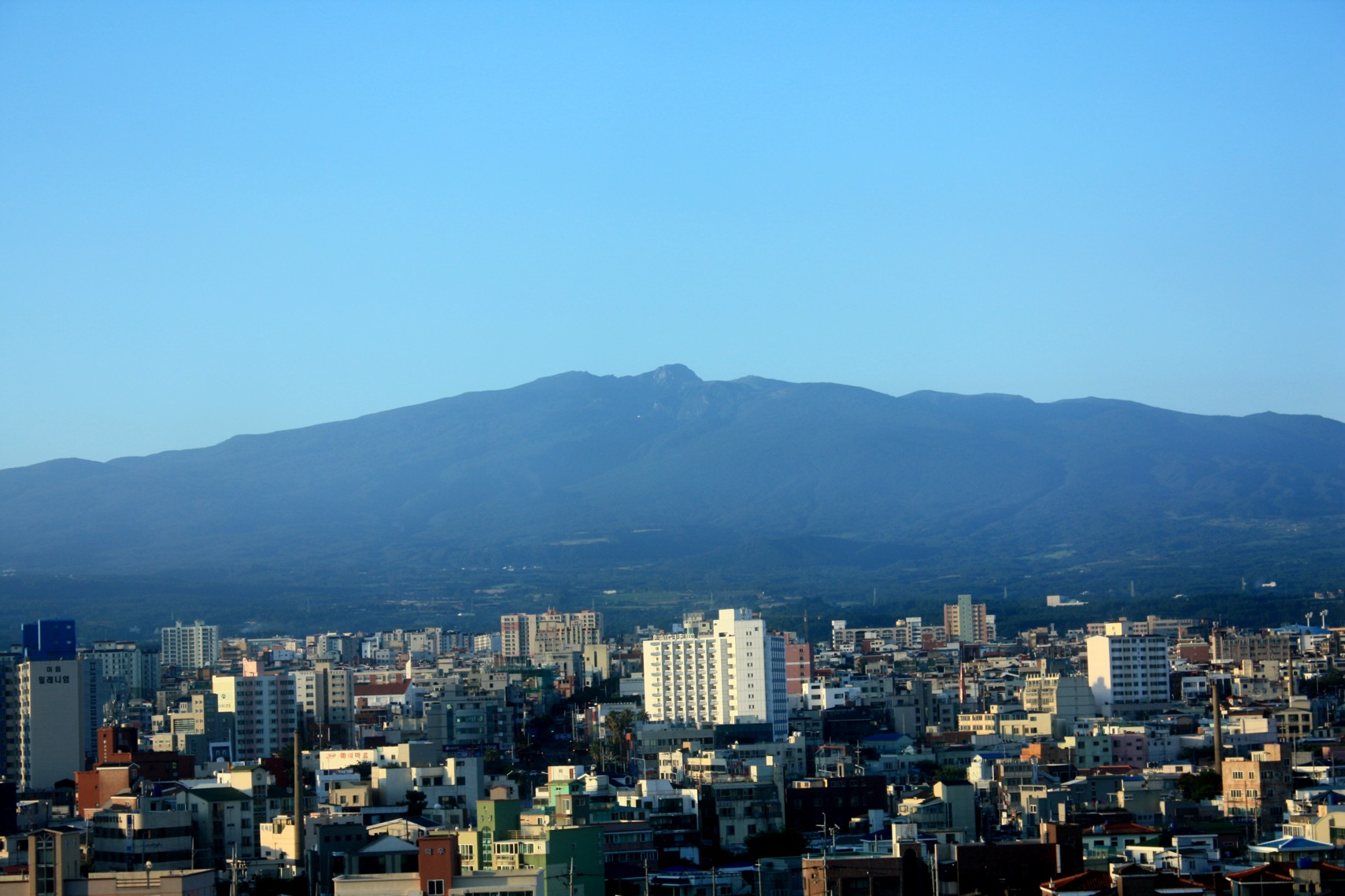
Korea's southern volcanic island and the country's renewable-energy showcase — Jeju is on track to be the first Korean region running on 100% renewable electricity, with offshore wind farms along the north and south coasts and the largest concentrated solar capacity in the country. Hallasan (1,950 m, the highest peak in Korea) anchors the centre, the Olle Trail loops 425 km around the coast, and the UNESCO Geomunoreum lava-tube system runs underneath. EV rental share is the highest in Korea.

Highlights: Hallasan summit hike · Olle Trail coastal walks · Manjanggul lava tube (UNESCO) · Seongsan Ilchulbong sunrise peak

Best: May–Oct Browse stays →
Gyeongju eco-travel in South Korea #4
North

Gyeongju

The 1,000-year capital of the Silla kingdom (57 BCE – 935 CE) — an open-air museum where royal burial mounds dot the city centre, the Bulguksa temple and Seokguram grotto (both UNESCO) sit on the eastern hills, and the Yangdong folk village preserves Joseon-era wooden architecture. Gyeongju is on the KTX line (2 hours from Seoul), runs a fleet of electric tourist trams, and is the easiest place in Korea to stay in a traditional hanok inn for a fraction of a Seoul hanok rate.

Highlights: Bulguksa temple (UNESCO) · Seokguram grotto (UNESCO) · Tumuli Park royal mounds · Yangdong folk village

Best: Apr–May, Oct Browse stays →
Incheon eco-travel in South Korea #5
Capital

Incheon

Korea's port-of-arrival for almost every international traveller — and home to Songdo, one of the world's largest planned smart cities, built on reclaimed land with LEED-Neighborhood Development certification across the entire district, pneumatic waste collection and the Central Park canal system. Incheon is also the gateway to the 100+ islands of the West Sea (Ganghwa-do, Yeongjong-do, Muui-do), all reachable by ferry. The airport's AREX train links it to Seoul in 43 minutes.

Highlights: Songdo Central Park & smart-city district · Ganghwa-do island · Chinatown & Open Port quarter · Wolmido waterfront

Best: May–Sep Browse stays →
Daegu eco-travel in South Korea #6
Centre

Daegu

Korea's fourth city and the centre of the country's traditional medicine and textile industries — Yangnyeongsi (the 350-year-old herbal medicine market) anchors the centre, the Apsan ridge frames the city to the south, and the Gyeongsang province's spicy chimaek (chicken-and-beer) scene gets its national flavour from here. Daegu is on the main KTX line between Seoul and Busan (Seoul 1h40, Busan 50 minutes) and is part of Korea's hydrogen-bus pilot, with one of the largest fleets in the country.

Highlights: Yangnyeongsi herbal medicine market · Apsan Park ridge · Seomun night market · Donghwasa temple

Best: May–Sep Browse stays →
Andong eco-travel in South Korea #7
North

Andong

The Confucian heart of Korea and the home of the UNESCO-listed Hahoe folk village — a riverside village of thatched and tiled wooden houses that has been continuously lived in by the Ryu clan for over 600 years. Andong is the place to try jjimdak (braised chicken), to see a mask dance performance at Hahoe, and to stay in a working hanok at a fraction of Seoul rates. The Andong Mask Dance Festival every late September is one of Korea's classic folk events. KTX from Seoul is 2 hours.

Highlights: Hahoe folk village (UNESCO) · Andong Mask Dance Festival (late Sep) · Dosan Seowon Confucian academy · Wolyeonggyo wooden bridge

Best: Apr–May, Oct Browse stays →

Why summer eco-travel in South Korea?

South Korea sits at the structural intersection of an ambitious 30%-renewable-by-2030 grid backed by offshore wind on the south coast and the world's largest tidal power station at Sihwa, a KTX high-speed rail network running on certified clean electricity that links Seoul to almost every major city in under three hours, and Jeju's path to becoming Korea's first 100%-renewable region. Add the LEED-certified Songdo smart city, a hanok inn tradition that runs on low-energy ondol heating, and UNESCO depth across Hahoe, Gyeongju, Bulguksa, Changdeokgung and the Jeju volcanic landscape. IMPT layers a UN-verified 1-ton CO₂ removal on every booking — at no extra cost, paid from our commission.

Frequently asked questions

When is the best time to visit South Korea for a sustainable summer?

Late May and September–October are the sweet spot — the heat is manageable, the rainy season (jangma, late June to late July) is over, and most eco-hotels offer their lowest rates. July and August are hot and humid; Jeju and the east coast (Gangneung, Sokcho) are the smart picks if you must travel mid-summer.

How do I use the KTX network for a low-impact Korea trip?

The KTX (Korea Train Express) runs at up to 305 km/h on certified clean electricity — Seoul to Busan in 2h15, Seoul to Gangneung in 2h, Seoul to Mokpo in 2h30. Foreign visitors can buy the Korail Pass (1, 2, 4 or 5 consecutive days) which covers KTX, ITX and most regional trains. Per passenger, a KTX leg emits roughly 90% less CO₂ than the equivalent Korean Air or Asiana domestic flight.

What is a hanok stay, and is it a sustainable option?

A hanok is a traditional Korean wooden house with ondol (underfloor heating) and clay-tile or thatched roofing — many have been restored as guesthouses, especially in Bukchon (Seoul), Jeonju, Gyeongju and the Hahoe folk village near Andong. Hanok ondol is one of the lowest-energy heating systems in traditional architecture, and most modern hanok guesthouses use ground-source heat pumps or biomass rather than electric resistance heat.

How does Jeju Island fit into a sustainable Korea trip?

Jeju is the most accessible single-destination eco-trip in Korea — a 1-hour flight from Seoul-Gimpo, on track to be Korea's first 100%-renewable region, with the highest EV rental share in the country, the Olle Trail 425-km coastal walk, and UNESCO-listed volcanic features. If you want to skip the domestic flight, the night ferry from Mokpo (4h on KTX from Seoul) is a 5-hour overnight crossing.

Are eco-hotels in South Korea more expensive than regular hotels?

No — booking through IMPT costs the same as booking direct, with the carbon removal paid from our commission. Korean hotel rates spike around Chuseok (the autumn harvest festival, mid-September to early October) and Seollal (lunar new year) — that's pure supply-and-demand, not an eco-premium. Hanok stays are generally comparable to mid-range hotels, not premium.

How does IMPT make a Korean hotel booking carbon-neutral?

Every reservation triggers a verified one-tonne CO₂ removal — UN-certified, paid from our commission. The offset comes from a portfolio of reforestation and renewable-energy projects, and is enough to fully balance a typical long-haul flight from Europe to Seoul plus a 7-night stay. See how we carbon-balance every stay.

Plan a South Korea summer that gives back

Same price as direct booking. No hidden fees. Every reservation removes one UN-verified ton of CO₂ — paid from our commission, never added to your bill.

Search 7 South Korea destinations →