
How Loyalty Programs Are Becoming Climate Tools
Climate-Positive Shopping
🌱
Earn carbon credits on every euro you spend
Same prices as direct · 25,000+ partnered stores.
Your shopping rewards are now funding verified climate projects — with transparency, measurable impact, and proof.
Dear IMPT Family,
Loyalty programs have always been built on a simple promise: spend with us, and we’ll give you points. You accumulate them, redeem them for a discount or a free item, and the cycle repeats. It’s transactional, frictionless, and designed to make you loyal to a brand.
But what if those points could do something bigger? What if, instead of just discounting your next purchase, your rewards funded measurable climate action? A decade ago, that was a dream. Today, it’s reshaping how major retailers think about customer value and planetary impact.
The evolution is quiet but powerful. What started as a niche idea — “what if loyalty meant something for the planet?” — is now becoming infrastructure. Global retailers are asking how they can use the behavioral power of loyalty to drive climate finance. And they’re finding real answers.
🔥 Key Highlights 🔥
1️⃣ How traditional loyalty points evolved into climate rewards
2️⃣ The economic model: why brands are funding climate projects
3️⃣ How verified carbon credits work inside loyalty systems
4️⃣ Real examples of climate-aligned loyalty today
5️⃣ What measurable impact looks like
6️⃣ Why this matters for your wallet and the planet
1️⃣ From Points to Purpose
For 30 years, airline miles and credit card points were the template: accumulate currency, redeem for travel or merchandise. The model works because it creates stickiness without lowering prices. A shopper who’s 500 points from a reward will spend again to reach it.
The innovation is simple: what if the “reward” fund — the cash or value a brand sets aside for loyalty — goes partly into climate projects instead of solely into discounts? Some brands have started letting shoppers choose: redeem your points for a discount, or redirect them to a climate project. Others go further: 100% of loyalty earnings fund verified offsets, and shoppers see the measurable outcome (tonnes of CO₂ avoided, trees planted, etc.).
The key insight: shoppers increasingly value impact. If given a choice between a small discount and climate action, a growing percentage choose climate. Brands saw this and adapted.
2️⃣ The Economics: Why Brands Are Funding Climate
This sounds generous, but it’s rational. Here’s the math:
A large retailer might allocate 1–2% of transaction volume to loyalty value. For a €10 billion annual sales company, that’s €100–200 million. Historically, this goes to discounts, free items, or cash back. But discounts compress margins and train customers to expect them.
Carbon offsets cost roughly €10–30 per tonne, depending on the project. A shopper who spends €1,000 per year and generates ~5 tonnes of shopping-related emissions can offset that through a €50–150 investment. For the brand, allocating a portion of loyalty budget to carbon offsets is cheaper than blanket discounts and it builds a story: “Your loyalty funds climate.”
Brands also get marketing value and regulatory goodwill. EU regulations increasingly require companies to report on climate financed throughout their supply chain. A loyalty program that transparently funds offsets is auditable, reportable, and defensible.
3️⃣ How Verified Carbon Credits Work in Loyalty
The critical piece is verification. Not every “carbon offset” is created equal. A credible climate loyalty program uses third-party verified carbon credits — typically through standards like Gold Standard, Verra, or ICROA.
Here’s the flow: You make a purchase. The platform calculates the embedded carbon (from manufacturing, transport, packaging, etc.). A portion of your loyalty earnings is directed to buy a verified carbon credit from a project (reforestation, methane capture, renewable energy). That credit is permanently retired (taken off the market), ensuring no double-counting.
The shopper sees the receipt: “Your €50 purchase supported €2 in verified carbon offsets at a renewable energy project in India.” You can click through and see the project, the auditor, the impact. It’s transparent and measurable.
4️⃣ Real Examples Today
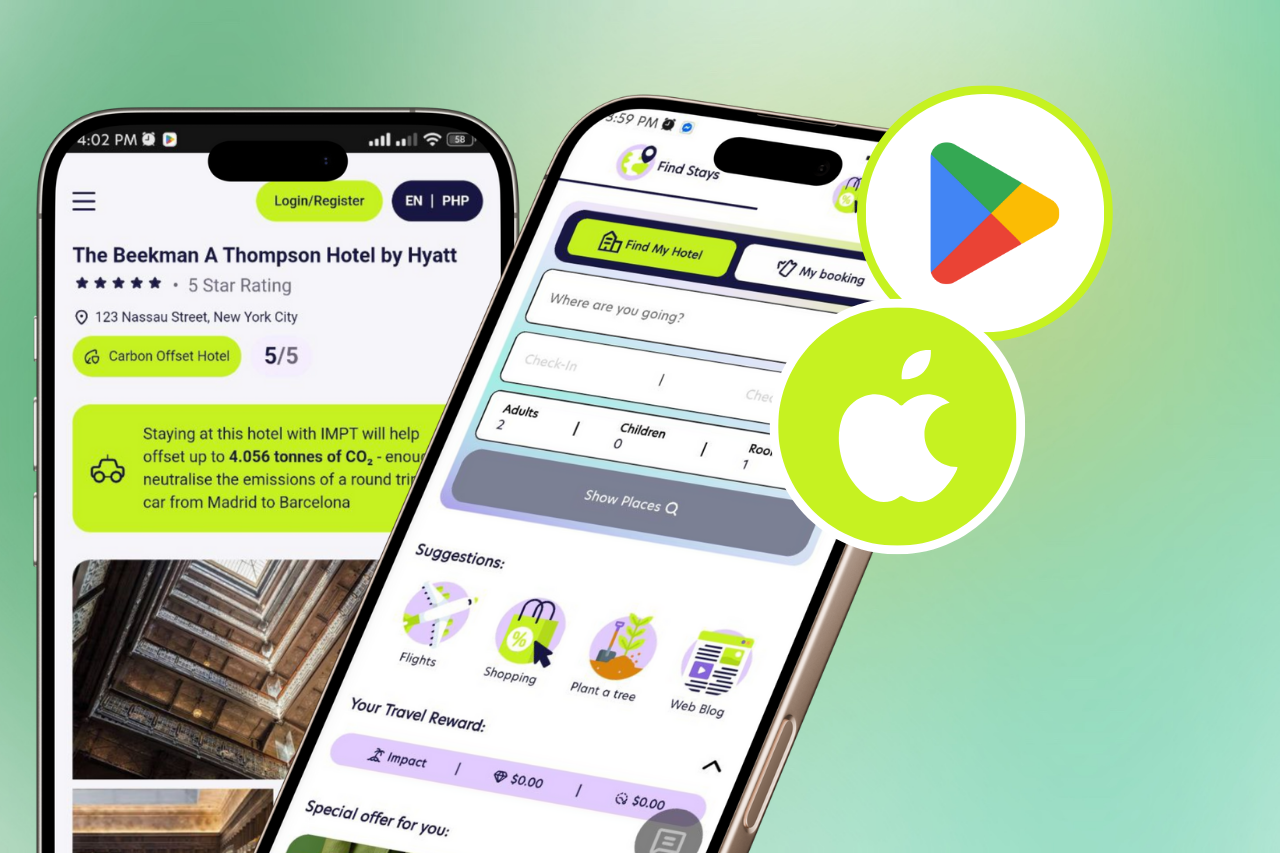
IMPT itself pioneered this model in the loyalty space. Shoppers earn rewards on 25,000+ retail and travel partners, and those rewards fund verified carbon credits retired on-chain. The blockchain element is crucial for transparency — each credit is traceable.
Travel platforms like some Booking.com partners now let you allocate a percentage of loyalty to carbon projects. Major apparel brands are testing loyalty-to-offset models. The infrastructure is still young, but it’s real and scaling.
5️⃣ Measuring Real Impact
The risk is that climate loyalty becomes another marketing layer without substance. That’s why auditable systems matter. When you see that your €100 in annual spending funded 0.5 tonnes of CO₂ avoided through a verifiable project, with a certificate and a link to the project — that’s impact, not greenwashing.
Some platforms now show lifetime impact: “Your loyalty with us has funded 3.2 tonnes of carbon offsets, equivalent to planting 42 trees.” Again, these should be backed by third-party data. If they’re not, skepticism is warranted.
6️⃣ Why This Shifts Everything
Climate loyalty programs work because they align three things: consumer behavior (shopping), brand incentive (retention), and planetary need (carbon reduction). You don’t have to sacrifice spending to support climate — your existing spending is now engineered to fund it.
The lock-in is the transparency. Once you’ve seen where your loyalty money goes, once you’ve watched a carbon project mature through verified reporting, switching to a brand with vague “sustainable” loyalty feels like a step backward.
Looking Ahead — Loyalty as Climate Currency
In five years, expect carbon-backed loyalty to be standard at major retailers. The question won’t be “does this loyalty program fund climate?” but “how much, which projects, and how transparent is the auditing?” Shoppers will compare loyalty programs not just on earning rates but on climate impact per pound spent.
This is where IMPT and platforms like it become essential. They’re building the infrastructure so that loyalty and climate action are inseparable. Your rewards work harder. The planet benefits measurably. And you get to see it.
Let’s keep building — together. 🌍💚