SUMMER 2026 · 6 destinations

Montenegrin Summer in Montenegro.

The southernmost fjord in Europe, a UNESCO walled bay, and a coastline still cheaper and quieter than the Croatian one to the north — six Montenegrin destinations where summer 2026 can be both unforgettable and carbon-balanced.

6 destinations 1 ton CO₂ removed per booking 100% UN-verified
Find your Montenegro eco-stay →

Same price as direct · 1 ton CO₂ removed per booking

Montenegro generates roughly 50% of its electricity from renewables — the Perućica and Piva hydroelectric plants on the inland rivers carry the bulk of the load, and a steady solar build-out across the coastal municipalities is closing the seasonal gap. The country has been a NATO member since 2017 and is an EU accession candidate currently on track for the late-2020s, which has driven a deep harmonisation of consumer-protection, environmental and grid-interconnection rules with the EU acquis. The Euro is the de facto currency despite Montenegro not being in the Eurozone. Add the UNESCO-listed Bay of Kotor (the southernmost fjord-like inlet in Europe), the strict-protection zones of Durmitor and Lovćen national parks, and a coastal corridor short enough that one rental car covers it all, and Montenegro is one of the most under-rated Adriatic summer options.

Every reservation below removes one verified ton of CO₂ through IMPT's offset programme — paid from our commission, never added to your bill. The six destinations span the UNESCO Bay of Kotor (Kotor, Tivat, Herceg Novi), the open coast (Budva, Sveti Stefan), and the capital (Podgorica) — each picked for sustainability infrastructure as much as for the Adriatic light.

Top 6 eco destinations in Montenegro

Kotor eco-travel in Montenegro #1
Bay of Kotor

Kotor

The UNESCO-listed walled old town sits at the deepest point of the bay — a Venetian quarter tucked beneath Mount Lovćen, with the fortress walls climbing 1,200 steps up the cliff behind it for the postcard view. The waterfront is now closed to non-resident cars during peak hours, which has cut local emissions sharply. Stay inside the walls in a converted palazzo, or in Perast 12 km up the bay for the Our Lady of the Rocks islet views.

Highlights: Kotor city walls climb · Old Town & St Tryphon's Cathedral · Perast & Our Lady of the Rocks · Maritime Museum

Best: May–Sep Browse stays →
Budva eco-travel in Montenegro #2
Coast

Budva

Montenegro's main beach city — a walled Venetian old town on a small peninsula, with the Mogren and Slovenska beaches either side and the longer Bečići strip just south. The 2,500-year-old Citadel anchors the old town, and the cobblestone streets are closed to traffic. Several eco-pensions around Pržno and Petrovac (a 15-minute drive south) operate solar-thermal water heating and zero-build buffer zones against the coastline.

Highlights: Old Town & Citadel · Mogren & Slovenska beaches · Bečići coastal walk · Sveti Nikola island day-trip

Best: Jun–Sep Browse stays →
Tivat eco-travel in Montenegro #3
Bay of Kotor

Tivat

Tivat hosts Montenegro's only commercial airport and the Porto Montenegro super-yacht marina — a former Yugoslav naval base converted into a master-planned, LEED-certified mixed-use waterfront with electric-only inner-harbour vessels and rooftop solar across the new build. Walk the seafront to Donja Lastva, then ferry across to Žanjic and the Blue Cave on the Luštica peninsula. The greenest entry point into the bay.

Highlights: Porto Montenegro marina · Naval Heritage Collection · Luštica peninsula day-trip · Donja Lastva seafront walk

Best: May–Sep Browse stays →
Herceg Novi eco-travel in Montenegro #4
Bay of Kotor

Herceg Novi

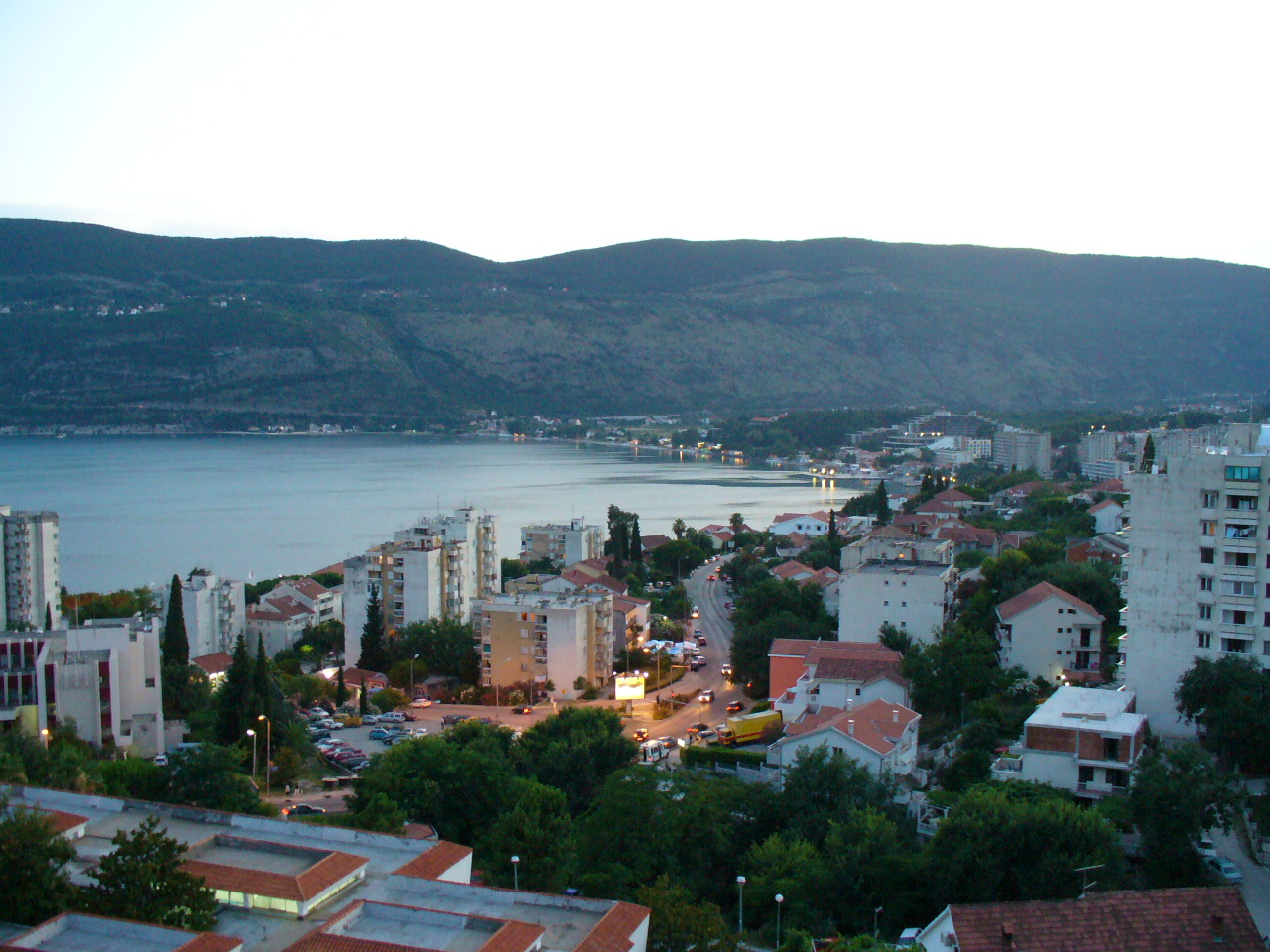
The bay's western entrance — a hillside old town stacked above the water with the Forte Mare and Kanli Kula fortresses anchoring the seafront. Herceg Novi has the bay's mildest microclimate (subtropical plants in the Botanical Garden) and the 7-km seafront promenade, the Pet Danica, runs unbroken to Igalo's mud-spa beach. The closest base to Croatia — Dubrovnik airport is a 50-minute drive across the border.

Highlights: Pet Danica seafront promenade · Forte Mare fortress · Igalo mud-bath spa · Savina Monastery

Best: May–Sep Browse stays →
Sveti Stefan eco-travel in Montenegro #5
Coast

Sveti Stefan

The most photographed image in Montenegro — a fortified 15th-century fishing village built on a small island, connected to the mainland by a slim sandy causeway. The island itself is currently a closed luxury resort (under legal dispute as of 2026), but the mainland beach is publicly accessible and the surrounding bay is studded with eco-resorts. Stay in nearby Pržno for boutique accommodation with the postcard view from your terrace.

Highlights: Sveti Stefan island view · Pržno & Miločer beaches · Miločer Park royal estate · Reževići Monastery

Best: Jun–Sep Browse stays →
Podgorica eco-travel in Montenegro #6
Centre

Podgorica

The capital — flat, modern and often skipped, but it's the rail hub for the Belgrade–Bar overnight sleeper (one of the most scenic train lines in Europe) and the launch point for inland day-trips to Lake Skadar (the Balkans' largest lake, a national park and bird reserve) and the Ostrog cliff-monastery. Podgorica's green infrastructure programme has added river-front cycle paths along the Morača and Ribnica.

Highlights: Lake Skadar national park · Ostrog Monastery day-trip · Morača River walk · Cathedral of the Resurrection

Best: May–Sep Browse stays →

Why summer eco-travel in Montenegro?

Montenegro sits at the structural intersection of high hydropower (the Perućica and Piva plants supply roughly half of national generation), a single UNESCO-listed coastal corridor that's short enough to drive end-to-end in two hours, and strict national-park protection on Durmitor, Lovćen and Skadar that limits commercial build-out across roughly 10% of the country's land area. The Euro is the de facto currency, NATO membership and EU accession candidacy have aligned consumer-protection rules with European norms, and the Bar–Bari and Kotor–Italy ferry connections cut emissions for travellers coming from the Italian peninsula. IMPT layers a UN-verified 1-ton CO₂ removal on every booking — at no extra cost, paid from our commission.

Frequently asked questions

When is the best time to visit Montenegro for a sustainable summer?

Late May, June and September are the sweet spot — the bay's microclimate keeps Kotor in the mid-20s°C, the sea is swimmable from June onwards, and the eco-pensions offer their lowest rates. July and August bring peak demand on the open coast (Budva, Sveti Stefan); if you have flexibility, shift to the shoulder weeks. The mountains (Durmitor, Lovćen) are best in June–early July when wildflowers peak.

How do I get to and around Montenegro without a long flight chain?

Tivat and Podgorica have direct seasonal flights from most western European hubs. Alternatively, fly to Dubrovnik (Croatia) and cross the border by bus or rental car — Herceg Novi is 50 minutes away. The Belgrade–Bar overnight sleeper train is one of Europe's classic scenic rail journeys. The Bar–Bari ferry to Italy runs all summer. Buses link every coastal town; rental cars are useful for inland trips to Skadar and Durmitor.

Are eco-hotels in Montenegro more expensive than regular hotels?

No. Booking through IMPT costs the same as booking direct — the carbon removal is paid from IMPT's commission, not added to your bill. Montenegrin hotel rates spike sharply in the August peak and during the Sea Dance and Kotor Sea Star festivals — that's pure supply-and-demand, not an eco-premium.

Which Montenegrin destination is best for first-time visitors?

Kotor plus Budva is the classic combination — three nights inside the UNESCO walled town for the bay, the fortress climb and Perast, then two nights in Budva or Sveti Stefan for the open beaches. If you're flying in via Tivat, start there for the Porto Montenegro waterfront before moving deeper into the bay. Add a day for Lovćen national park and the Njegoš mausoleum at the top.

How does IMPT make a Montenegrin hotel booking carbon-neutral?

Every reservation triggers a verified one-tonne CO₂ removal — UN-certified, paid from our commission. The offset is sourced from a portfolio of reforestation and renewable-energy projects in the Mediterranean basin and East Africa, and is enough to fully balance a typical short-haul flight to Tivat or Podgorica plus a 4-night stay. See how we carbon-balance every stay.

Is Montenegro in the EU, and what currency do they use?

Montenegro is an EU accession candidate, not yet a member, but the Euro is the de facto currency (Montenegro unilaterally adopted it in 2002). The country is a NATO member. EU, UK, US and most other passport holders enter visa-free for stays up to 90 days. Card payment is universal in coastal towns, and English is widely spoken in hospitality. Carry small notes for buses and inland villages.

Plan a Montenegro summer that gives back

Same price as direct booking. No hidden fees. Every reservation removes one UN-verified ton of CO₂ — paid from our commission, never added to your bill.

Search 6 Montenegro destinations →