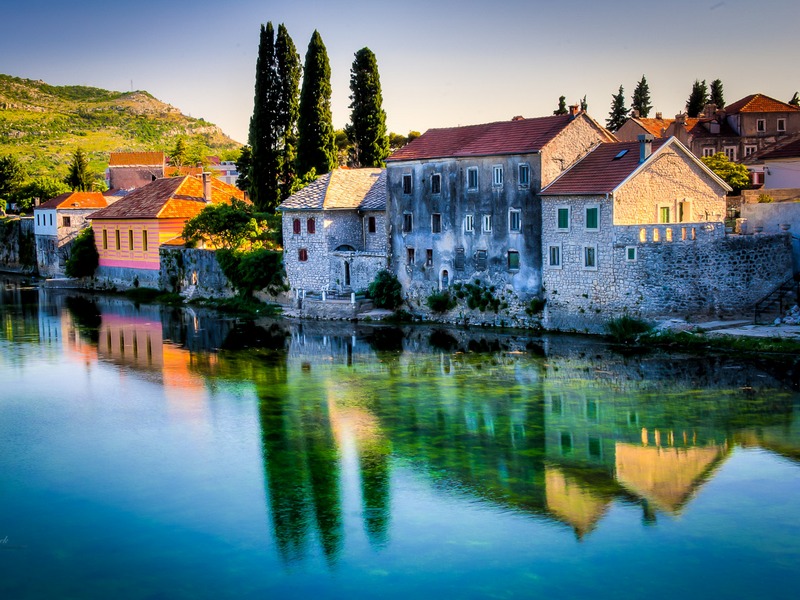
SUMMER 2026 · 6 destinations

Bosnian Summer in Bosnia and Herzegovina.

The reconstructed Stari Most, an Ottoman-Austrian cultural crossroads, and the wildest unmanaged mountain forests still left in Europe — six destinations across Bosnia and Herzegovina where summer 2026 can be both unforgettable and carbon-balanced.

6 destinations 1 ton CO₂ removed per booking 100% UN-verified
Find your Bosnia and Herzegovina eco-stay →

Same price as direct · 1 ton CO₂ removed per booking

Bosnia and Herzegovina generates over 35% of its electricity from renewables — hydropower on the Neretva, Drina and Vrbas rivers is the historic backbone, and wind installations on the Herzegovinian karst have added meaningful capacity since 2018. The country is an EU accession candidate (granted candidate status in late 2022), which is driving steady alignment with EU environmental, consumer-protection and biodiversity rules. The Dinaric Alps run almost the full length of the country and contain some of Europe's last genuinely unmanaged primary forest — the Perućica reserve inside Sutjeska National Park is one of only two in Europe. Add the UNESCO-listed Stari Most at Mostar, the still-intact Sarajevo old bazaar (Baščaršija), and a small but serious eco-pension network in the Herzegovinian wine valleys, and Bosnia is one of the lowest-cost, lowest-impact summer options on the Adriatic hinterland.

Every reservation below removes one verified ton of CO₂ through IMPT's offset programme — paid from our commission, never added to your bill. The six destinations span Herzegovina (Mostar, Trebinje, Počitelj), central Bosnia (Sarajevo, Jajce), and the north (Banja Luka) — each picked for sustainability infrastructure as much as for the post-war reconstruction story.

Top 6 eco destinations in Bosnia and Herzegovina

Mostar eco-travel in Bosnia and Herzegovina #1
Herzegovina

Mostar

The UNESCO-listed Stari Most — the 16th-century Ottoman bridge destroyed in 1993 and rebuilt to the original Mimar Hayruddin specification using the same Tenelija limestone — anchors a restored old bazaar (the Kujundžiluk) of coppersmiths and silk-cloth shops. Daily divers leap 24 m from the bridge into the Neretva each summer. Day-trip to Blagaj's Dervish house at the source of the Buna river, and Kravice waterfalls 40 km south.

Highlights: Stari Most & old bazaar · Blagaj Dervish House · Kravice waterfalls · Koski Mehmed Pasha Mosque

Best: May–Sep Browse stays →
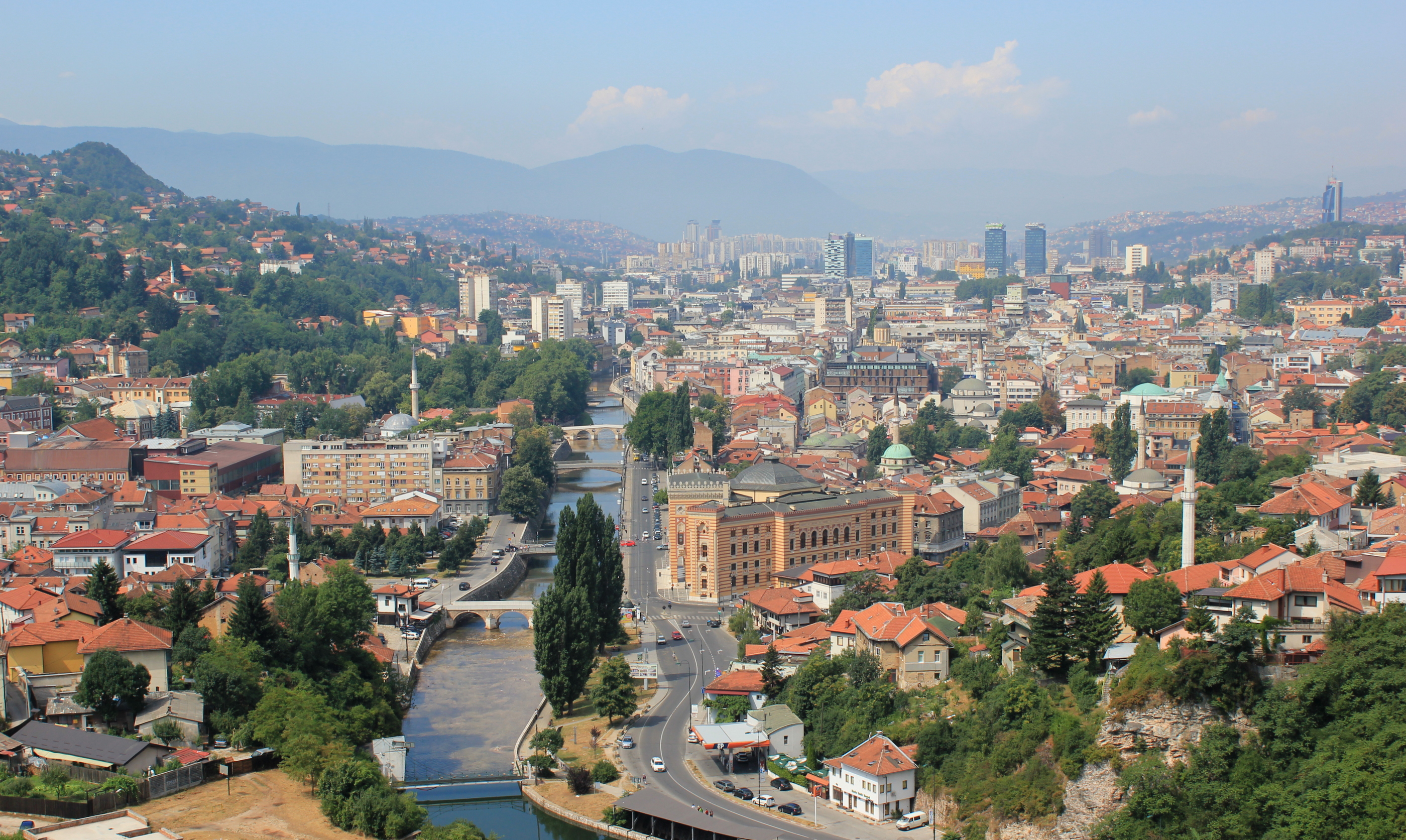
Sarajevo eco-travel in Bosnia and Herzegovina #2
Centre

Sarajevo

The capital sits in a long valley with the Olympic mountains (Jahorina, Bjelašnica, Trebević) rising directly behind it. The Baščaršija Ottoman bazaar still works as a functioning craftsmen's quarter, the Austro-Hungarian quarter to the west holds the National Library and the Latin Bridge (Franz Ferdinand assassination site), and the Yellow Fortress above the old town gives the best valley sunset. The Tunnel of Hope museum tells the siege story directly.

Highlights: Baščaršija Ottoman bazaar · Latin Bridge & City Hall · Tunnel of Hope museum · Yellow Fortress viewpoint

Best: May–Sep Browse stays →
Banja Luka eco-travel in Bosnia and Herzegovina #3
North

Banja Luka

The second city and the administrative capital of Republika Srpska — a relaxed, green-shaded riverfront town built along the Vrbas river under the Kastel fortress. The river is the main attraction: rafting in the upper canyon, swimming in the lower stretches, and the long Banj Brdo woodland directly above town. The Cathedral of Christ the Saviour and the Ferhat Pasha Mosque (rebuilt 2016 after wartime destruction) anchor the city centre.

Highlights: Kastel fortress & Vrbas riverfront · Cathedral of Christ the Saviour · Ferhat Pasha Mosque · Vrbas rafting day trip

Best: May–Sep Browse stays →
Trebinje eco-travel in Bosnia and Herzegovina #4
Herzegovina

Trebinje

The southernmost town in the country and Herzegovina's emerging wine capital — Trebinje sits in a karst basin surrounded by Vranac and Žilavka vineyards, with the Trebišnjica river running through the old town. The Arslanagić Bridge, the Hercegovačka Gračanica monastery on the hill above town, and the daily morning market in the plane-tree-shaded main square make a slow weekend itinerary. Dubrovnik is 30 km south across the Croatian border.

Highlights: Old town & plane-tree square · Hercegovačka Gračanica monastery · Arslanagić Bridge · Vukoje and Tvrdoš winery visits

Best: May–Sep Browse stays →
Jajce eco-travel in Bosnia and Herzegovina #5
Centre

Jajce

A medieval royal town built around a 22-metre waterfall where the Pliva river drops into the Vrbas — the only waterfall in Europe that falls directly inside an inhabited town centre. The old fortress (where the last Bosnian king Stjepan Tomašević was crowned in 1461) crowns the hill, and the Pliva lakes 5 km west still have working medieval water-mills floating in the river. The 4th-century Mithras Temple is one of the best-preserved in the Balkans.

Highlights: Pliva waterfall · Jajce fortress & royal town · Pliva lakes & water-mills · Mithras Temple

Best: May–Sep Browse stays →
Pocitelj eco-travel in Bosnia and Herzegovina #6
Herzegovina

Pocitelj

A fortified hillside Ottoman village — the entire settlement is on the UNESCO Tentative List — stacked above the Neretva river halfway between Mostar and the Croatian border. The Hajji Alija Mosque, the Sahat-Kula clock tower and the Gavrankapetanović House cluster inside walls climbed in a half-hour. Počitelj is a half-day stop rather than a full base; the closest eco-pensions sit in the surrounding villages on the Neretva floodplain.

Highlights: Pocitelj fortified village · Hajji Alija Mosque · Sahat-Kula clock tower · Neretva river views

Best: May–Sep Browse stays →

Why summer eco-travel in Bosnia and Herzegovina?

Bosnia and Herzegovina sits at the structural intersection of high hydropower (the Neretva, Drina and Vrbas plants supply roughly a third of national generation), some of Europe's last genuinely unmanaged primary forest (the Perućica reserve in Sutjeska National Park, plus the protected zones of Sutjeska, Una and Kozara), and EU accession candidacy that's driving steady alignment with European environmental and consumer-protection rules. The country's still-developing tourist sector keeps pricing among the lowest in Europe, the UNESCO Stari Most and the listed Ottoman quarters in Sarajevo and Počitelj anchor cultural visits, and an emerging eco-pension network across Herzegovina (especially Trebinje and Blagaj) reflects post-war reconstruction now genuinely sustainability-led. IMPT layers a UN-verified 1-ton CO₂ removal on every booking — at no extra cost, paid from our commission.

Frequently asked questions

When is the best time to visit Bosnia and Herzegovina for a sustainable summer?

May, June and September are the sweet spot — Herzegovina (Mostar, Trebinje, Počitelj) gets into the mid-30s°C in July and August, but Sarajevo and Jajce stay in the high 20s°C thanks to elevation. The Dinaric mountains (Sutjeska, Jahorina) are at their best in June and early July when wildflowers peak. Shoulder weeks offer the lowest eco-pension rates.

How do I get around Bosnia and Herzegovina without flying everywhere?

The country has only one main airport (Sarajevo) plus a smaller one at Mostar; most international visitors fly into Dubrovnik (Croatia) or Split and cross the border by bus or rental car. The intercity bus network covers every destination on this list, and the Sarajevo–Mostar–Čapljina rail line is one of the most scenic short train rides in the Balkans. Rental cars are useful for the inland mountain national parks but unnecessary for the cities.

Are eco-hotels in Bosnia & Herzegovina more expensive than regular hotels?

No. Booking through IMPT costs the same as booking direct — the carbon removal is paid from IMPT's commission, not added to your bill. Hotel rates here are among the lowest in Europe; small peaks happen during the Sarajevo Film Festival in August and around Bajram (Eid) — that's pure supply-and-demand, not an eco-premium.

Which destination in Bosnia and Herzegovina is best for first-time visitors?

Sarajevo plus Mostar is the classic combination — three nights in Sarajevo for the Baščaršija, the Tunnel of Hope and the Olympic-mountain day trips, then two nights in Mostar for the Stari Most, Blagaj and Kravice. Add Trebinje (1–2 nights) if you're connecting to Dubrovnik and want a slow wine-valley pause.

How does IMPT make a Bosnian hotel booking carbon-neutral?

Every reservation triggers a verified one-tonne CO₂ removal — UN-certified, paid from our commission. The offset is sourced from a portfolio of reforestation and renewable-energy projects in the Mediterranean basin and East Africa, and is enough to fully balance a typical short-haul flight to Sarajevo plus a 4-night stay. See how we carbon-balance every stay.

Is Bosnia and Herzegovina safe to visit, and what's the currency situation?

Yes — the country has been at peace since 1995 and is an EU accession candidate. EU, UK, US and most other passport holders enter visa-free for stays up to 90 days. The currency is the Convertible Mark (BAM), pegged to the Euro at a fixed 1.95583 KM/€ rate. Euros are widely accepted informally in hospitality; card payment is universal in cities, less so in mountain villages. Mine-affected areas are clearly marked and easy to avoid; stick to marked paths in national parks.

Plan a Bosnia and Herzegovina summer that gives back

Same price as direct booking. No hidden fees. Every reservation removes one UN-verified ton of CO₂ — paid from our commission, never added to your bill.

Search 6 Bosnia and Herzegovina destinations →